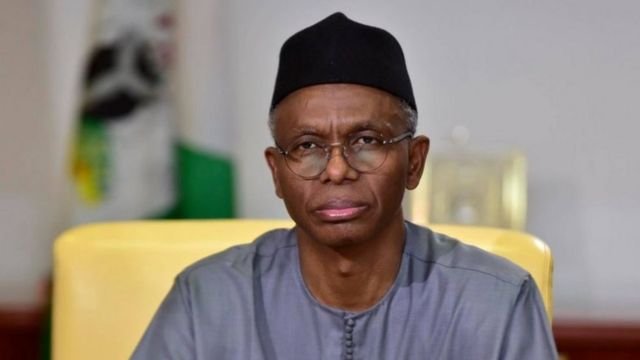
The Independent Corrupt Practices and Other Related Offences Commission has confirmed that former Kaduna State governor, Nasir El-Rufai, is in its custody following his release from the Economic and Financial Crimes Commission, in a dramatic turn in ongoing corruption investigations.
In a statement issued late Wednesday by the commission’s Head of Media and Public Communications, J. Okor Odey, the ICPC said El-Rufai was in its custody as of the close of work on February 18, 2026.

“The Independent Corrupt Practices and Other Related Offences Commission writes to state that Malam Nasiru El-Rufai, the former Governor of Kaduna State, is in our custody as at close of work today, Wednesday, the 18th day of February, 2026. Malam Nasiru El-Rufai is in the custody of the Commission in connection with ongoing investigations,” the statement read.
The commission did not disclose details of the allegations under investigation but stated that updates would be provided in line with its mandate and procedures.
Read Also:
- DSS takes El-Rufai into custody after EFCC interrogation over separate security matter
- El-Rufai to spend second night in EFCC custody over alleged fraud probe
- EFCC grills detained El-Rufai over alleged ₦432bn fraud
El-Rufai was reportedly taken into ICPC custody shortly after he was granted administrative bail by the EFCC at about 8 p.m. on Wednesday. Sources described the development as a rearrest outside the EFCC headquarters in Abuja, although officials have not publicly used that term.
The former governor had honoured an EFCC invitation on Monday, February 16, 2026, and spent two nights at the anti-graft agency’s Abuja office while responding to questions over alleged financial improprieties during his tenure from 2015 to 2023. Some reports have linked the EFCC probe to alleged mismanagement running into hundreds of billions of naira tied to projects executed under his administration.
Following his release from the EFCC, operatives of the ICPC moved swiftly to assume custody. Initial speculation suggested the involvement of the Department of State Services, but sources within the DSS denied any role, stating that El-Rufai was not detained by the agency.
Legal observers note that while the EFCC typically handles financial crimes and large scale fraud, the ICPC’s mandate covers abuse of office and other related offences. The parallel investigations may therefore address separate aspects of alleged misconduct.
As of February 19, 2026, no formal charges have been announced. Both agencies have indicated that investigations are ongoing and have urged the public to allow due process to run its course.
The case is expected to remain under close scrutiny as Nigerians watch for possible arraignment, further questioning, or additional disclosures in the days ahead.