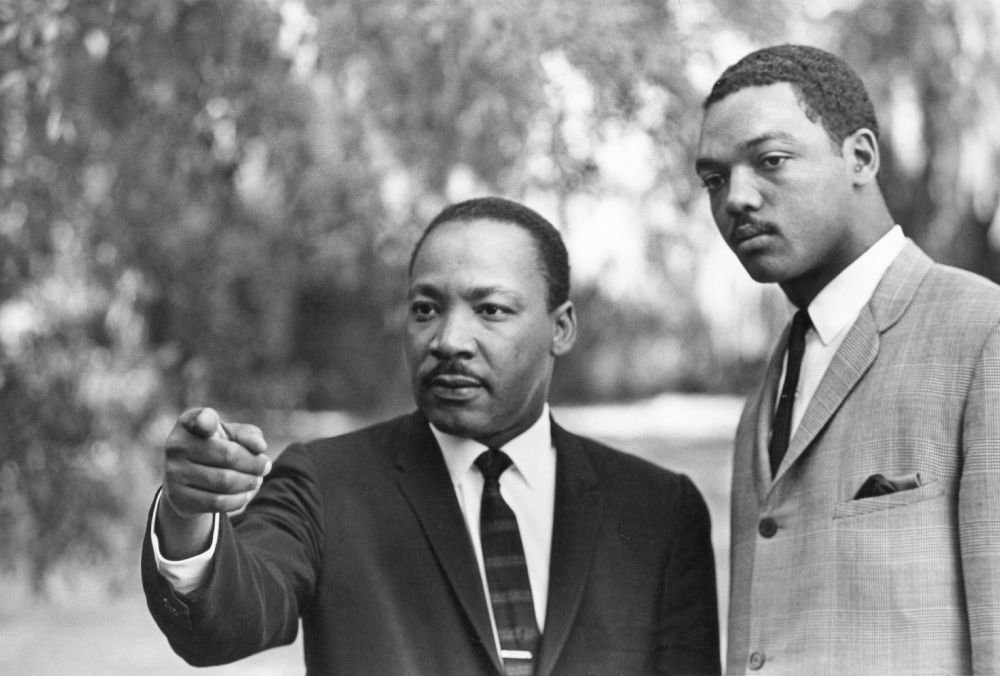
Jesse Jackson, a key figure during the US civil rights movement of the 1960s, was known for being the first African-American to make the jump from activism to major-party presidential politics.
A protege of Martin Luther King Jr, Jackson built a career around working to politically organise and improve the lives of African-Americans, and became a national force during his two White House campaigns.
While other African Americans sought the US presidency, Jackson was the first to find significant success at the ballot box, which would pave the way for those who came after, including Barack Obama and Kamala Harris.

Over the course of his career, Jackson built a movement to bring America’s increasingly diverse population together, with a message that centred on poor and working-class Americans.
A gifted orator, Jackson articulated the frustrations of those who felt like second-class citizens in the world’s most prosperous democracy.
His speech to the 1988 Democratic National Convention, which ended with the refrain “keep hope alive”, would be echoed decades later in the “hope and change” slogan of Obama’s successful 2008 presidential campaign.
After his historic run of presidential campaigns, Jackson went on to position himself as an elder statesman within the Democratic Party.
However, Jackson’s later years would be punctuated by scandal, including revelations of marital infidelity and financial impropriety involving his son and political heir, Jesse Jackson Jr, who served as a congressman from Illinois.
In 2017, the elder Jackson was diagnosed with Parkinson’s disease and largely withdrew from public life. That diagnosis was subsequently changed to one of progressive supranuclear palsy, a degenerative brain disease with similar symptoms.
Read also:
- US civil rights leader Jesse Jackson dies aged 84
- U.S. to close embassy in Abuja in honour of Martin Luther King Jr. Day
- Convicted Nigerian Nationals face deportation as ICE intensifies U.S. crackdown
Jesse Jackson was a prominent civil rights campaigner who ran twice for the Democratic Party’s nomination for president in 1984 and 1988.
Born on October 8, 1941, in Greenville, South Carolina, Jackson became involved in politics at an early age. He rose to prominence in the 1960s as a leader in Martin Luther King’s Southern Christian Leadership Conference.
He was present with King when he was assassinated in Memphis, Tennessee, in 1968. He launched two social justice and activism organisations: Operation PUSH in 1971, and the National Rainbow Coalition a dozen years later.
Jackson remained an activist into later life, pursuing civil rights for disenfranchised groups both in the United States and abroad.