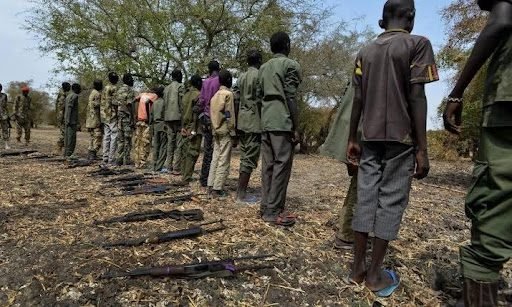
The United Nations has highlighted Nigeria as one of the top five countries with the highest rates of child recruitment into armed groups, raising concerns about the escalating global crisis affecting children in conflict zones.
This information was shared in an interview on the UN website ahead of the International Day Against the Use of Child Soldiers by Vanessa Frazier, the UN Special Representative for Children and Armed Conflict.
Frazier characterized the recruitment and use of minors as one of the most enduring and devastating violations occurring in conflict areas worldwide.

“In 2024 alone, over 7,400 children were recruited or utilized by armed forces and groups — and these are just the verified cases,” she stated.
“The recruitment and use of children remains one of the most serious violations we face.”
UN data indicates that the highest levels of violations are currently found in the Democratic Republic of the Congo, Nigeria, Somalia, Syria, and Myanmar.
The UN also expressed alarm over emerging trends in Sudan, where children are reportedly being assigned roles from sentry duties to frontline combat.
Frazier warned that the statistics mask deeply personal stories of trauma and disrupted childhoods. “Each number in our report represents a child whose innocence has been taken away,” she remarked.
Over the last 30 years, the UN’s mandate on children and armed conflict has facilitated the release of more than 220,000 children from armed groups.
The special representative’s office directly engages with armed groups to negotiate the release of minors, often serving as one of the few channels of communication in active conflict zones.
After their release, UNICEF and partner organizations manage the reintegration process, offering psychosocial support, education, and community rehabilitation.
However, reintegration, particularly for girls, is often complicated by stigma.
“Girls who return may face rejection from their communities, especially those who come back with children,” Frazier pointed out, highlighting the complex trauma that female survivors frequently endure.
In Nigeria, insurgent violence in the northeast has left thousands of children susceptible to abduction and forced recruitment over the past decade.
Frazier noted that these experiences continue to have enduring impacts on families and communities.
Read also:
- United Nations intervention in the Sahel crisis: what implications
- Former United Nations Consultant Becomes 15th Odio-Ologbo of Delta Community
- Nigeria partners with UN, African Nations to tackle violence against Children
Reflecting on her encounters with survivors of Boko Haram abductions, Frazier emphasized the human aspect behind the statistics.
“When you see a 13-year-old girl holding her baby, you realize how conflict deprives children of their childhood,” she said.
“These are children who should have bright futures ahead of them.”
She underscored the importance of prevention in the international response, particularly through ensuring access to education.
“Even during conflict, children must remain in school. When they are out of school, they become significantly more vulnerable to recruitment.”