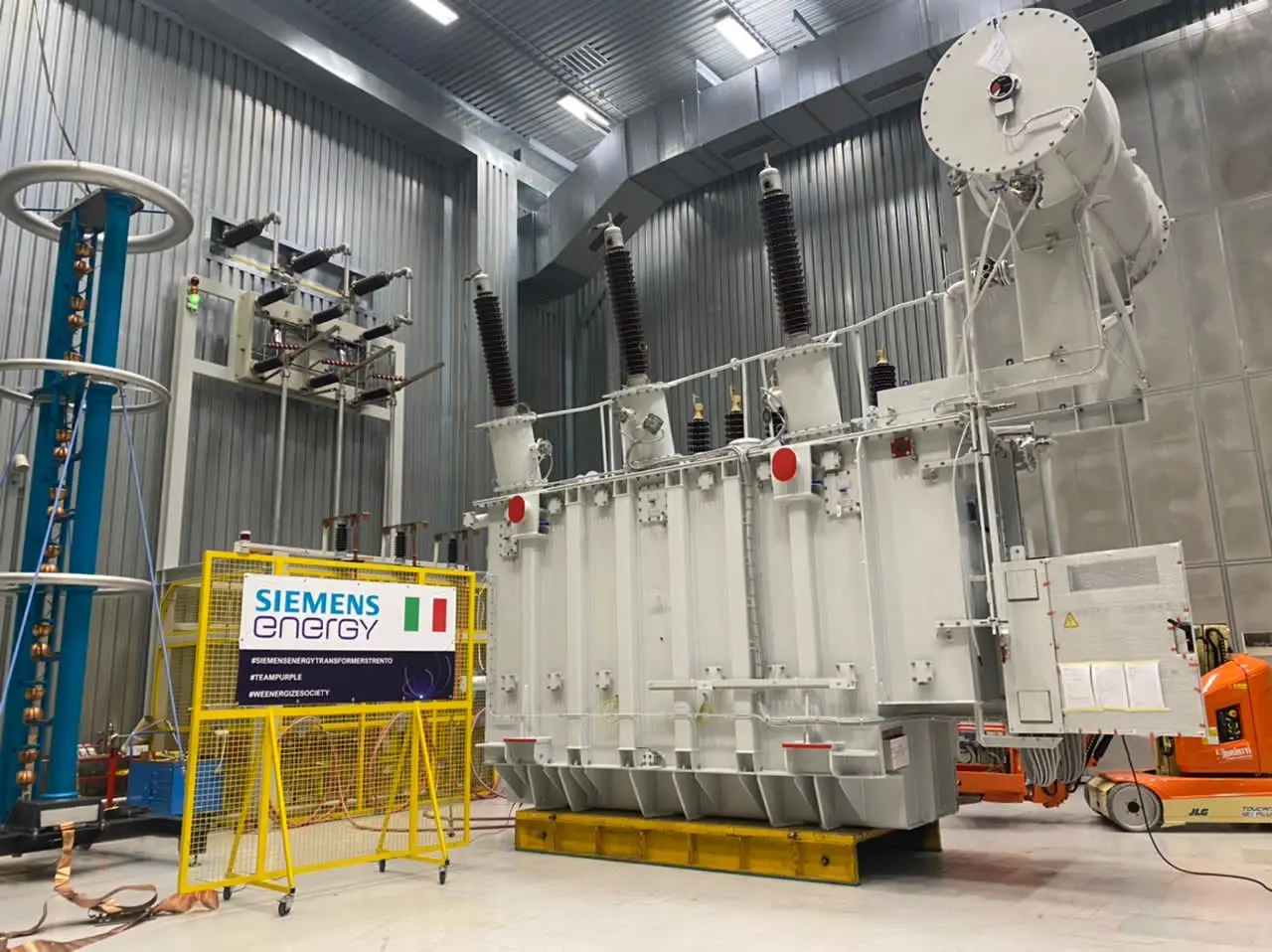
The Federal Government has confirmed that Phase One of the Siemens power project will add 7,000 megawatts to Nigeria’s national grid through extensive transmission upgrades and infrastructure expansion.
Special Adviser on Communication and Strategy to the Minister of Power, Bolaji Tunji, said the current administration revived the long-delayed initiative after it lost momentum under former President Muhammadu Buhari.

Tunji’s remarks followed comments by Germany’s Deputy Head of Mission in Nigeria, Johannes Lehne, who stated that the 2.3 billion dollar Siemens power deal remained largely dormant until President Bola Tinubu assumed office.
The Siemens agreement, formally known as the Presidential Power Initiative, was conceived as a government-to-government partnership between Nigeria and Germany to overhaul the country’s transmission and distribution network. The framework aimed to stabilise the grid and gradually increase electricity supply from an average of about 4,000MW to ambitious phased targets.
Under the original plan, Siemens projected capacity expansion to 7,000MW in the early phase and 11,000MW in the medium term, with a long-term aspiration of 25,000MW. However, the project struggled to gain traction after its launch.
Tunji acknowledged that the initiative slowed following the death of Abba Kyari, the late Chief of Staff to former President Buhari, who had driven its early implementation. He also cited the disruption caused by the COVID-19 pandemic as a major factor that stalled progress.
According to him, President Bola Tinubu signed an accelerated agreement with the German government to fast-track execution of the project. The renewed push led to the delivery of the pilot phase, which included about 20 power transformers, half of them mobile substations.
The government has now commenced Phase One of the Presidential Power Initiative. Tunji explained that the phase will focus on strengthening the national grid and expanding transmission capacity, with an estimated 7,000MW expected to be unlocked through improved infrastructure.
He said the works will involve upgrading 14 existing substations and constructing 21 new ones across the country. The programme includes both brownfield upgrades and greenfield projects aimed at modernising Nigeria’s transmission backbone.
Read Also:
- The $2.5B deal that could end Nigeria power crisis
- Tinubu, Siemens push for Extra 4,000MW deal to end Nigeria’s power crisis
- Power sector gets boost as FG targets over 11 Million Meters by 2025 – Adelabu
In December 2024, the Federal Executive Council approved 262.75 billion naira, equivalent to 161.33 million euros, to fund the first phase of the project. The approved works cover substations in Onitsha, Offa, Abeokuta, Ayede and Sokoto.
Lehne, speaking earlier at the Sub-Saharan Africa International Petroleum Exhibition and Conference in Lagos, confirmed that the bilateral partnership in the power sector regained momentum under the Tinubu administration. He noted that the Presidential Power Initiative is focused on reactivating Nigeria’s transmission system and expanding electricity access.
On December 1, 2023, Nigeria and Germany formalised renewed commitments to the initiative on the sidelines of COP28 in Dubai, with President Bola Tinubu and German Chancellor Olaf Scholz presiding over the signing. The agreement builds on contracts initially signed in 2018.
Tunji said Phase One represents a critical step toward grid stability and improved electricity supply for industrial, commercial and residential users. He added that subsequent phases will further expand transmission capacity, integrate renewable energy sources and modernise the grid in line with the long-term 25,000MW target.
As Nigeria continues to grapple with chronic power shortages, the success of the Siemens power project is expected to play a decisive role in boosting economic growth, supporting manufacturing and improving daily life for millions of citizens.