Residents of Ojokoro Local Council Development Area of Lagos State are set to benefit from the Lagos State Government’s Eco-Circulate waste-to-value initiative as authorities move to deepen grassroots participation in the circular economy and tackle mounting environmental concerns.
The Office of the Special Adviser to the Governor on Climate Change and Circular Economy disclosed in a statement on Thursday that the Eco-Circulate Project Train would arrive in Ojokoro on February 28, 2026, for a one-day community activation programme.

The event is scheduled to hold at Akinsola Street, off Oguntonna Street, beside the MFM Church, Ajala, Ojokoro, from 10:00am.
The statement noted that the activation is aimed at educating and mobilising residents to adopt circular economy practices, particularly waste sorting and recycling.
The Special Adviser to the Governor on Climate Change and Circular Economy, Titilayo Oshodi, said the initiative underscores the state government’s commitment to converting waste into economic value.
Read also:
- LASG to Divert Traffic for Phase 1 of Rail Mass Transit Project
- Indomie celebrates mothers, unveils ‘unconditional love’ campaign
- Tinubu pays Tribute to Literary Legend, Biodun Jeyifo
“Eco-Circulate promotes waste valorisation, responsible consumption, climate literacy and inclusive economic participation. We are positioning circular practices as a socially impactful model that delivers both environmental and economic benefits,” Oshodi said.
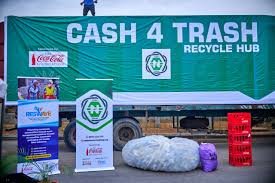
Under the scheme, residents are expected to bring sorted recyclable materials, including plastics, PET bottles, metals, cans, cartons, textiles and paper waste. These items will be exchanged for incentives such as cash, airtime, data subscriptions, food items and clean cooking gas.
Oshodi disclosed that since its launch, the programme has been activated in communities including Ayobo, Badagry, Ajah, Surulere, Maryland, Onigbongbo, Trade Fair Complex, Victoria Island and Lekki.
She added that over 8,000 residents have directly benefited from the initiative, while an estimated 50,000 others have been reached through related outreach efforts.
According to the government, more than 40,000 tonnes of recyclable waste have been collected and processed across participating communities, reducing the volume of waste ending up in landfills, drainage channels and waterways.
Environmental stakeholders have repeatedly linked poor waste management in Lagos to persistent flooding, blocked drains and public health risks, particularly in densely populated areas.
The Ojokoro activation will also feature a Climate Literacy for Children segment targeting children aged between eight and 10, aimed at instilling climate-conscious habits at an early stage.
The programme is being implemented in partnership with the Ojokoro LCDA as part of the state’s broader plan to shift from a linear “collect-and-dump” waste model to a circular system designed to generate economic value while improving environmental outcomes.
“This is about community ownership. When residents see waste as a resource and not a burden, we move closer to a cleaner, more resilient Lagos,” Oshodi said.