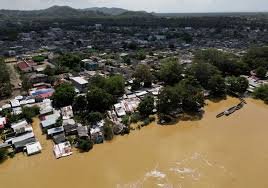
Colombia has declared a nationwide state of emergency following devastating floods that have killed at least 18 people and displaced more than 150,000 residents across the country’s northern cattle producing region.
The worst affected area is Cordoba department, where swollen rivers and a burst dam submerged entire communities, leaving homes underwater and forcing families to flee with little notice. Authorities confirmed that more than 4,300 houses have been destroyed, while vast stretches of grazing land and farmland remain submerged.

The flooding has dealt a severe blow to the agricultural sector. The national cattle ranchers’ association reported that at least 1,200 cattle have died, raising fears of long term economic damage in one of Colombia’s key livestock regions. Large areas used for ranching and crop production are still under water, complicating rescue and recovery operations.
Read also:
- FG declares state of emergency on Suleja-Minna road construction
- Tinubu declares State of Emergency on security, orders fresh recruitment across Armed Forces
- Breaking: ECOWAS declares state of emergency in West Africa
Colombia’s disaster relief agency had earlier reported 22 deaths nationwide earlier in the week, but later revised the toll to 18 after verification. Thousands of families are now sheltering in temporary camps as emergency workers continue search, rescue and relief efforts.
President Gustavo Petro signed an emergency decree granting his administration special powers for 30 days to respond to the crisis. The measure allows the government to redirect funds and allocate resources to affected departments without seeking prior approval from Congress, a move aimed at speeding up humanitarian assistance and reconstruction.
The floods have intensified concerns about extreme weather events in Colombia, where heavy rains linked to climate variability frequently trigger landslides and river overflows. Officials warn that additional rainfall could worsen conditions in already saturated regions.
As recovery efforts gather pace, the focus remains on providing shelter, restoring infrastructure and preventing further loss of life in communities cut off by rising waters.