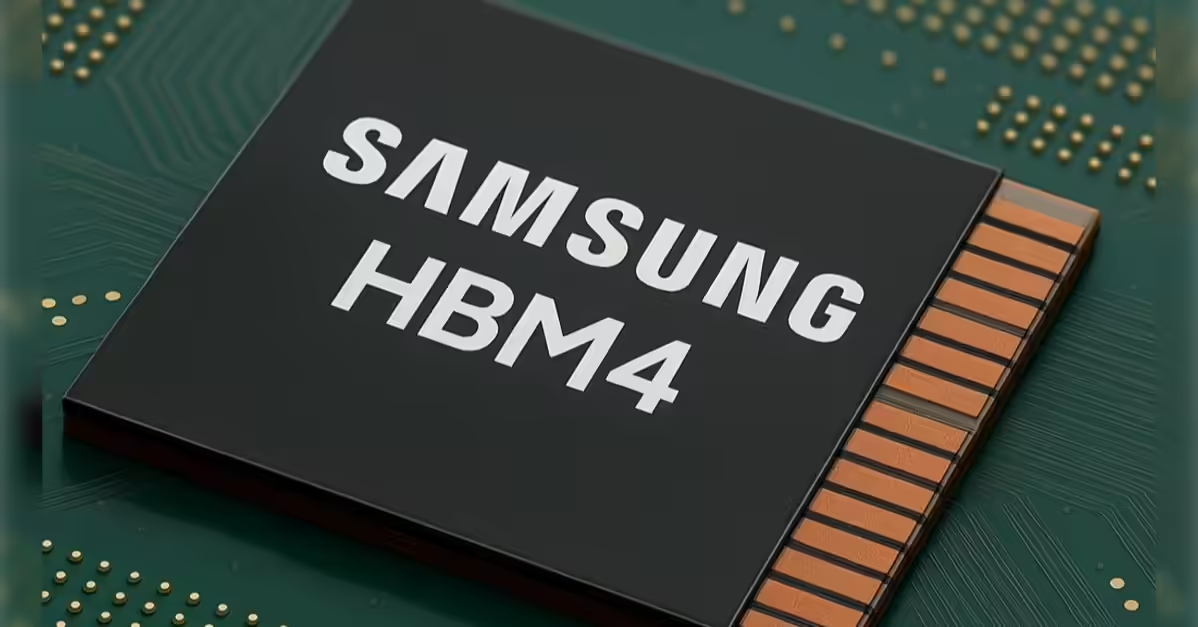
Samsung Electronics has begun mass production of its next generation high bandwidth memory chips, positioning itself at the centre of the global artificial intelligence boom and tightening the race with rivals such as SK hynix.
The South Korean technology giant confirmed on Thursday that it has started shipping its industry leading HBM4 chips to commercial customers, marking what it described as a first in the industry and an early leadership position in the rapidly expanding AI memory market.

High bandwidth memory, particularly the new HBM4 standard, is regarded as a critical component in powering the massive data centres driving artificial intelligence systems. These chips are designed to handle the enormous processing demands required for AI training and large scale computing operations. Industry watchers expect US chipmaker Nvidia, currently the world’s most valuable company and a dominant force in AI hardware, to be among Samsung’s primary buyers.
Samsung stated that its HBM4 chips deliver processing speeds exceeding previous generations by more than 40 percent, a leap the company says will meet escalating demand for higher performance in AI servers and cloud infrastructure. The surge in global investment in AI data centres has pushed orders for advanced memory chips to unprecedented levels.
Investors reacted swiftly to the announcement. Samsung Electronics shares rose more than six percent in afternoon trading on the Seoul stock exchange, reflecting renewed confidence in the company’s semiconductor strategy.
The race to dominate the AI memory chip sector has intensified between Samsung and its domestic rival SK hynix, both already key suppliers of high performance memory solutions. According to Taipei based research firm TrendForce, global memory chip industry revenue is projected to climb to more than 840 billion dollars by 2027, driven largely by artificial intelligence applications.
Read Also:
- Samsung takes bold step to crush rivals with sleeker foldable phones, advanced AI features
- Gemini in Chrome AI Browser raises alarming privacy concerns as expert warns of “new surveillance era”
- Google faces court scrutiny as AI threatens search monopoly
Samsung has already reported record quarterly profits this year, buoyed by strong demand for its advanced memory chips. The company has committed billions of dollars to expand semiconductor production capacity, including upgrades to manufacturing lines and investment in next generation processes to sustain output for AI driven demand.
The broader AI hardware ecosystem continues to revolve around Nvidia, whose graphics processing units are widely used in training artificial intelligence models. Since the release of OpenAI’s ChatGPT in late 2022, demand for AI computing infrastructure has accelerated sharply. Technology giants such as Apple, Microsoft and Amazon are developing in house AI chips, yet they continue to depend heavily on Nvidia powered systems and the high performance memory that supports them.
Analysts have cautioned that as chipmakers channel more production toward AI focused components, supply constraints could push up retail prices for consumer electronics worldwide.
Samsung’s move into full scale HBM4 production signals a decisive step in the global contest for AI supremacy, with South Korea aiming to rank among the top three artificial intelligence powers alongside the United States and China.