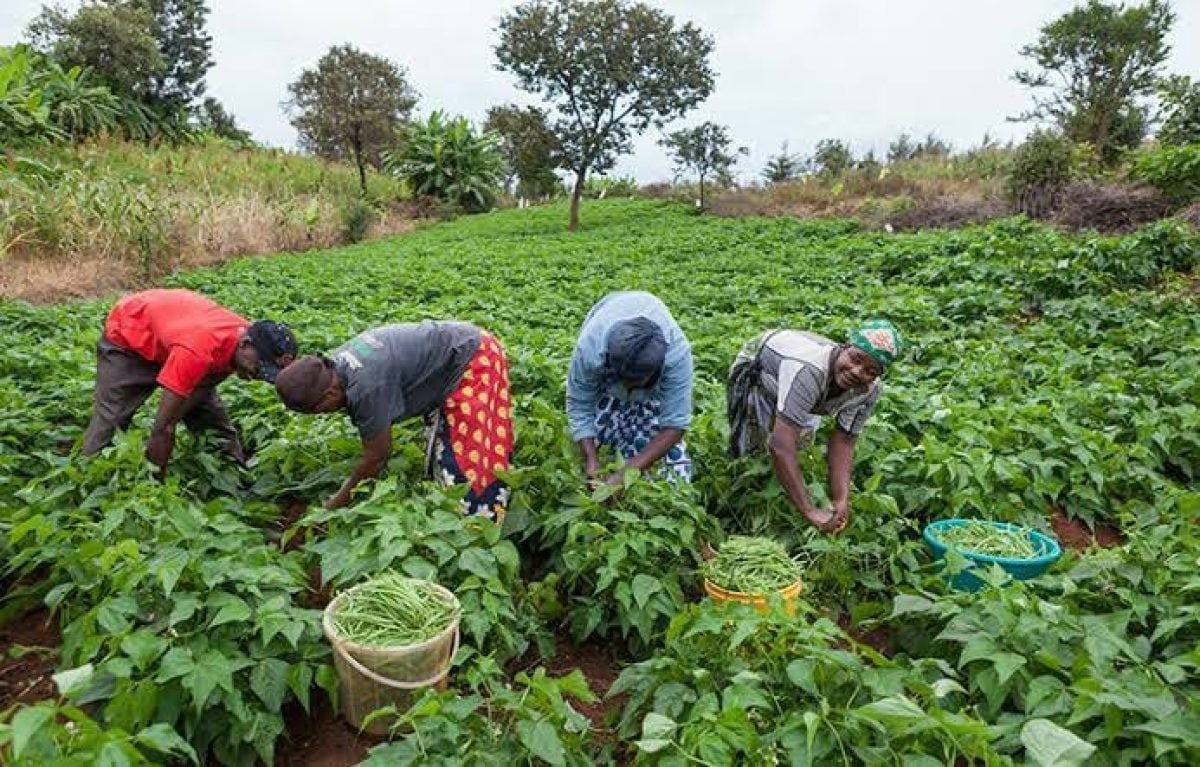
Nigeria has recorded over ₦2.3 trillion in revenue from crop production across the last four farming seasons under the National Agricultural Growth Scheme (NAGS 2.0), producing more than 2.5 million metric tons of staple crops.
Minister of State for Agriculture and Food Security, Sabi Abdullahi, revealed the figures during a dry season farming preparatory meeting in Abuja, outlining the government’s strategic plans to boost food production for the upcoming season.

As the 2026 dry season approaches, the government is building on the successes of past initiatives, including the NAGS-AP (Agro Pocket) project, to enhance efficiency and overcome bottlenecks in the agricultural sector. Part of these preparations involves the certification of planting materials for key food crops, ensuring farmers receive high-quality, improved seeds at the right time.
Read Also:
- Shift to organic farming boosts local agriculture in Taraba
- Reps propose prison farming scheme to tackle malnutrition, boost food security
- NADF working to achieve rain-fed farming year-round
In a major boost for crop production, the federal government is set to commence the implementation of the Japan International Cooperation Agency (JICA) project, focusing on rice, maize, and cassava across all 36 states and the Federal Capital Territory.
Under the 2025-2026 dry season alignment, the NAGS-AP Project, in collaboration with the Bank of Agriculture (BOA), will roll out a new operational framework aimed at addressing identified loopholes, eliminating bottlenecks, and driving higher yields nationwide.
With these initiatives, Nigeria aims to strengthen food security, increase farmers’ incomes, and sustain the momentum of the agricultural sector as a key driver of economic growth.