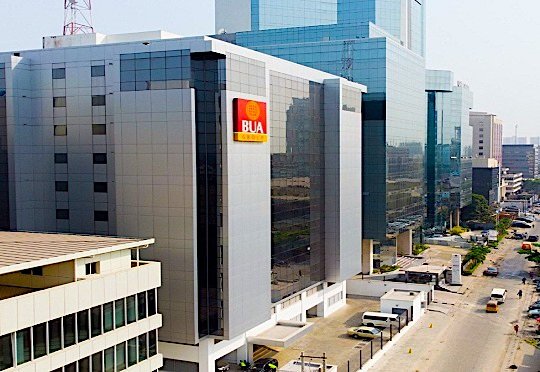
BUA Gypsum, a subsidiary of the BUA Group, has recorded a major breakthrough in Nigeria’s manufacturing industry with the commencement of production of POP gypsum plaster boards at its ultra-modern facility in Port Harcourt, Rivers State, marking a new phase in the country’s push for industrial self-reliance.
The development, announced by BUA Group Chairman, Abdul Samad Rabiu, follows the earlier launch of Plaster of Paris production at the same location and signals a bold move into full vertical integration within the construction materials value chain. Industry observers say the entry into gypsum plaster board manufacturing positions BUA Gypsum as one of the most comprehensive suppliers of interior finishing materials in Nigeria.
The Port Harcourt plant, located along Reclamation Road in Maccoba, was commissioned in late 2024 and is widely regarded as Nigeria’s largest gypsum plaster manufacturing facility. With a daily production capacity of 2,400 tons of gypsum plaster and an annual installed capacity of about 720,000 metric tons, the facility was built as a multi-line production hub designed to meet both domestic and regional demand.

While initial operations focused on gypsum plaster powder used for interior finishing, moulding, and decorative works, the launch of POP gypsum plaster boards significantly expands the company’s product portfolio. Also known as drywall or gypsum boards, the panels are widely used for walls, ceilings, partitions, and fire-resistant applications in residential, commercial, and industrial buildings.
Manufactured by sandwiching a gypsum core between layers of heavy paper or fiberglass mats, the boards offer key advantages including faster installation, improved sound insulation, fire resistance, and enhanced thermal performance, making them increasingly popular in modern construction.
The expansion is seen as strategically important for Nigeria, which has long depended on imported gypsum products despite having vast local deposits. By producing gypsum plaster boards locally to international standards, BUA Gypsum is expected to reduce import dependence, lower costs, and support the country’s rapidly growing construction sector driven by urbanisation and a widening housing deficit.
Abdul Samad Rabiu has consistently stressed that investments of this scale are crucial to strengthening Nigeria’s industrial base, creating jobs, and stimulating related industries such as mining, logistics, and building services. The Port Harcourt facility is already generating employment and supporting downstream activities across the construction value chain.
Read also:
- BUA Founder Abdul Samad Rabiu pledges $1.5m bonus to Super Eagles after Algeria win
- BUA chairman splashes ₦30bn in cash gifts on 510 employees
- BUA Group partners with Turkish firm to build 40TPH Feed Mill in Kano, boosting Nigeria’s livestock sector
At launch, the company introduced competitive pricing to make its products accessible and attractive to distributors, a move analysts believe will intensify competition and improve availability of quality gypsum products nationwide.
With a dedicated plaster board production capacity of up to 500 tons per day, BUA Gypsum is now positioning itself as a one-stop supplier for builders, contractors, and developers. The expansion also reflects a broader trend among Nigerian conglomerates investing heavily in backward integration and import substitution across key sectors of the economy.
The announcement has drawn widespread attention in business and construction circles, with many describing it as a strong example of private-sector-led industrialisation. As production ramps up, stakeholders expect the move to ease supply constraints, stabilise prices, and accelerate project delivery across Nigeria’s booming construction industry.