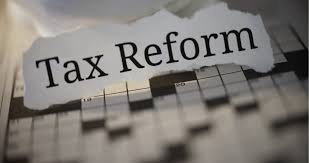
The Executive Chairman of the Akwa Ibom State Internal Revenue Service (AKIRS), Sir Okon Okon, has said that the tax reform bills currently before the Akwa Ibom State House of Assembly will significantly reduce the tax burden on low-income earners, encourage the growth of small and medium-scale enterprises (SMEs), and stimulate economic development in the state.

Sir Okon made this known during a public hearing on three executive bills: the Akwa Ibom State Revenue Service and Administration Bill 2025; the Akwa Ibom State Taxes and Levies Bill 2025; and the Akwa Ibom State Betting and Lottery Regulatory Agency Bill 2025.
He explained that the proposed legislation would eliminate multiple taxation, end the use of roadblocks for revenue collection, harmonise tax collections such as property tax and daily tickets, and ensure uniformity in tax administration and rates across the federation.
According to him, the reforms will also enhance the ease of doing business, provide exemptions and reduced personal income tax for low-income earners, remove minimum tax on businesses recording losses, and abolish nuisance taxes.
He added that essential services and goods such as food, transportation, healthcare, education, and rent would attract zero Value Added Tax (VAT), offering significant relief to households.
“The tax reforms have brought a lot of good news to the people,” Sir Okon said. “What used to be about 46 different taxes imposed by state and local governments have now been harmonised into just nine taxes across all states of the federation.
Read also:
- Governor Fubara recommits to focused governance, infrastructure development
- We do not import fuel, Nigerians get Euro-Standard products only – Dangote Refinery
- EBOWIN movement commends Governor Nwifuru on 35% gender affirmative action on appointments
For low-income earners, those earning N800,000 and below annually are now completely exempted from personal income tax, compared to the previous threshold of N300,000.”
He described the previous tax laws, which expired on December 31, 2025, as outdated and no longer suitable for current economic realities.
He further noted that the reforms introduce the digitisation of tax processes to promote efficiency, transparency, and accountability in revenue administration.
The public hearing was organised by the House Committee on Finance and Appropriation, chaired by Dr Itorobong Etim.
The Speaker of the House, Rt. Hon. Udeme Otong, was represented by the Deputy Speaker, Rt. Hon. KufreAbasi Edidem.
Also in attendance were the Deputy Chairman of the Committee, Rt. Hon. Asuquo Udo; the Commissioner for Finance, Mr Emem Bob; the Commissioner for Budget and Economic Planning, Dr Linus Nkan; the Commissioner for Transportation, Dr Anthony Luke; the Chairman of the Nigeria Labour Congress (NLC), Comrade Sunny James; as well as representatives of civil society organisations, the Chartered Institute of Taxation of Nigeria (CITN), and the Institute of Chartered Accountants of Nigeria (ICAN).