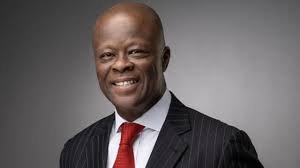
A development expert and President of the Africa Development Studies Centre (ADSC), Sir Victor Oluwafemi, has urged state governors to focus strictly on governance and stop encroaching on political leadership roles, warning that the confusion of both responsibilities is fueling instability across the country.
In a statement issued on Wednesday, Oluwafemi said President Bola Tinubu has “drawn a clear line” by insisting that governors must concentrate on administering their states, while political leadership should remain with established party leaders.

He described Nigeria’s recurring political crises as self-inflicted, arguing that they stem from a long-standing failure to separate executive authority from political control.
“The political instability in Nigeria is not accidental,” Oluwafemi said. “It is the direct result of refusing to distinguish between governance and political leadership.”
He cited the crisis in Rivers State as a clear example, saying it merely exposed a systemic problem already entrenched nationwide.
According to him, Tinubu’s intervention in Rivers was both timely and necessary.
Read also:
The president, he noted, reportedly made it clear that Nyesom Wike remains the political leader of Rivers State while ordering an immediate halt to any impeachment plot against Governor Siminalayi Fubara.
“This position does two things simultaneously,” Oluwafemi said. “It acknowledges political reality and protects constitutional order. Nigeria has lacked this clarity for far too long.”
He argued that being elected governor does not automatically make one a political leader, stressing that governance and political leadership are fundamentally different roles.
“A governor is the chief executive of a state, responsible for policy execution and service delivery,” he said.
“Political leadership is built over time, through party structures, influence, alliances, and control of political machinery. These roles do not always reside in the same person.”
Oluwafemi pointed to Borno State, where Governor Babagana Zulum runs the executive arm, but political decisions, he said, still defer to Vice President Kashim Shettima as the state’s political anchor.
He also referenced Lagos State, describing it as a textbook example of defined roles.
While Governor Babajide Sanwo-Olu oversees governance, Oluwafemi said the political direction and discipline of Lagos remain firmly shaped by Tinubu.
“This clarity has not weakened Lagos,” he said. “It has strengthened it, producing stability, coherence, and continuity.”
Similarly, he recalled that during the era of the late Muhammadu Buhari, Katsina State governors governed, but Buhari dictated the political tone of the state.
“No governor took core political decisions without reference to him,” Oluwafemi said. “Governance thrived because political reality was not denied.”
He warned that crises erupt when governors attempt to combine executive authority with political leadership, especially when they emerge from political structures built by others.
“If a political structure made you governor, office does not erase political lineage,” he said. “Executive power does not cancel political reality.”
He explained that attempts to collapse political leadership into executive authority often result in legislative battles, betrayal, and governance paralysis.
Oluwafemi called on political parties to stop presenting governors as automatic political leaders, insisting that such narratives mislead the public and fuel conflict.
“A governor is the executive, nothing more, nothing less,” he said. “Political leadership is contextual and rooted in influence and structure.”
He commended Tinubu’s handling of the Rivers State crisis, saying the president reaffirmed political reality while firmly blocking the abuse of impeachment powers.
“This is statesmanship. This is political maturity,” he said.
Oluwafemi concluded by urging Nigeria to stop confusing titles with authority and power with legitimacy.
“Governors must govern. Political leaders must lead politically,” he said.
“Democracy only stabilises when each respects their lane.”