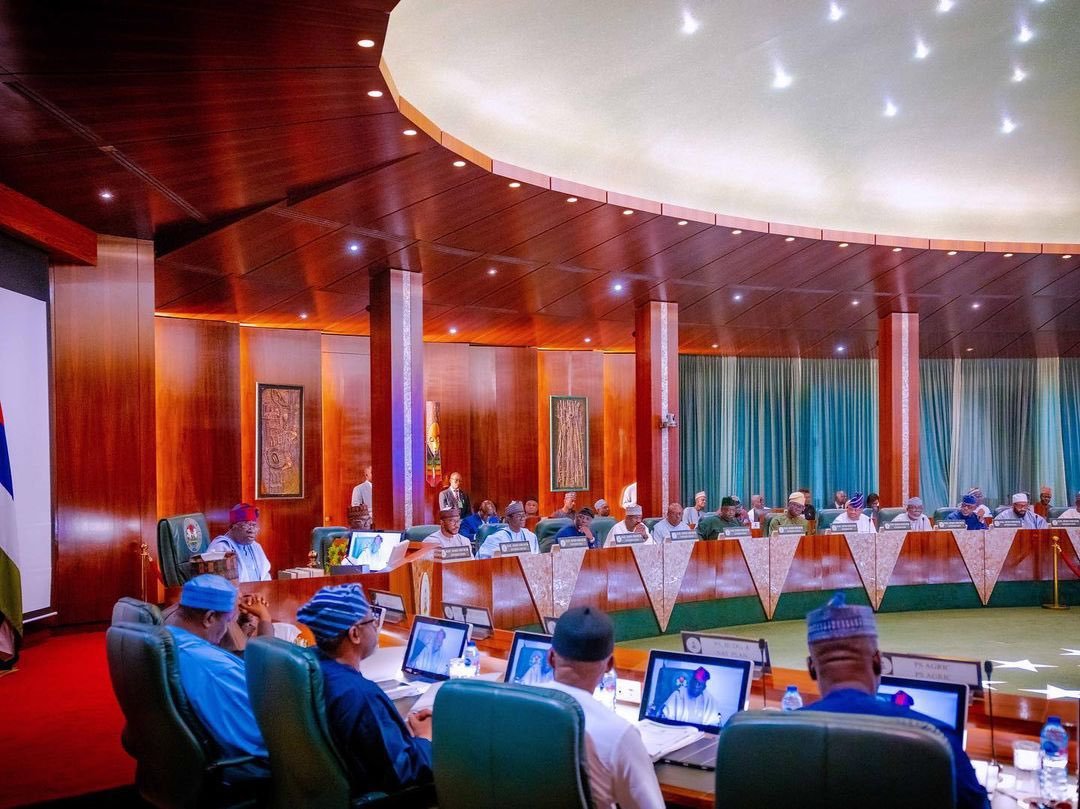
Two weeks after tensions disrupted discussions at the Federation Account Allocation Committee (FAAC) over revenue remittances and deductions, the Federal Government, state governments, and local councils have now shared a total of N1.969 trillion for December 2025, signalling a return to consensus.
The revenue was distributed at the January 2026 FAAC meeting held in Abuja, following a dispute between the Federal Government and some states over inflows from key revenue agencies and the rising cost of deductions, which had delayed agreement at the previous sitting. The disagreement has now been resolved, allowing the committee to finalise the allocation.

According to a FAAC communiqué, the N1.969 trillion distributable revenue comprised N1.084 trillion in statutory revenue, N846.507 billion from Value Added Tax (VAT), and N38.110 billion from the Electronic Money Transfer Levy. The committee disclosed that gross revenue of N2.585 trillion was available in December, from which N104.697 billion was deducted as cost of collection, and N511.585 billion went to transfers, refunds, and savings.
Read Also:
- Social Media erupts as Tinubu orders Revenue Agencies to remit all earnings to FAAC
- Historic Windfall: FAAC splashes record-breaking N2.2 Trillion revenue across Nigeria
- FAAC allocates N1.818tn to FG, states, LGs for June
The allocation to each tier of government saw the Federal Government receive N653.500 billion, states N706.469 billion, and local councils N513.272 billion. In addition, oil-producing states received N96.083 billion, representing 13 percent derivation revenue.
A breakdown of statutory revenue shows the Federal Government took N520.807 billion, states N264.160 billion, and local governments N203.656 billion. From the VAT pool of N846.507 billion, the Federal Government received N126.976 billion, states N423.254 billion, and local governments N296.277 billion.
Revenue performance for the month recorded notable increases in VAT, Companies Income Tax, Import Duty, and Stamp Duties, while Petroleum Profit Tax, Hydrocarbon Tax, and Electronic Money Transfer Levy recorded declines.
The latest allocation is expected to ease fiscal pressures on states and local councils, many of which depend heavily on FAAC inflows to pay salaries and fund capital projects.