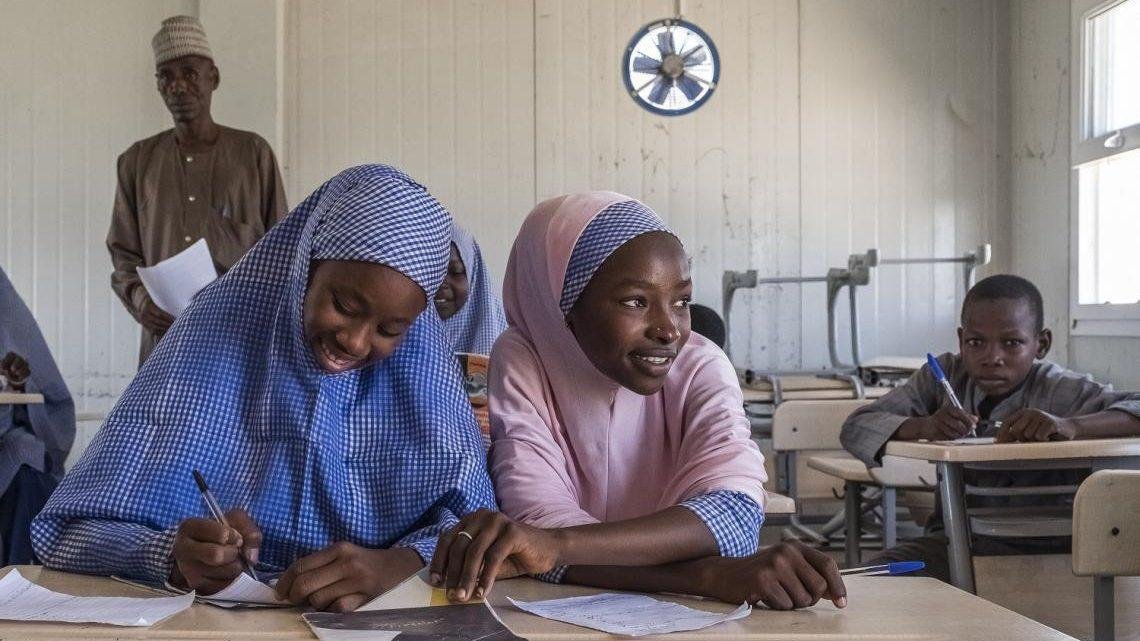
Youths in Kano State, under the platform of the Youth-Led Education Lab, have declared education a fundamental right, pledging to take ownership of reforms and demand accountability from government, institutions and communities to strengthen the state’s education sector.
The declaration was made in Kano at an event organised by the Kano State Universal Basic Education Board (SUBEB) in collaboration with the United Nations Children’s Education Fund (UNICEF) to mark the 2026 International Day of Education.
Speaking collectively, the youths, who described themselves as the “1.3 million strong heartbeats” of Kano State, vowed to mentor younger learners, protect school facilities and actively engage leaders to ensure improved access to quality education across the state.

They maintained that education is no longer a privilege but a right they have reclaimed, expressing commitment to seeing Kano evolve from a state of untapped potential to one of proven power by 2030.
UNICEF Chief of Field Office, Kano, Mr. Rahama Farah, described education as a fundamental human right and the bedrock of social and economic development.
He said children desire an education system that is inclusive, safe, relevant and empowering, supported by motivated teachers and responsive institutions.
Farah noted that quality education must enable children across Kano State and Northern Nigeria to dream freely, contribute meaningfully to society and ensure that no child is left behind.
He reaffirmed UNICEF’s commitment to supporting the state in strengthening education systems, improving learning environments and expanding access to quality education.
Read also:
- WAEC releases official timetable for 2026 CB-WASSCE for private candidates
- Every Nigerian must file Tax returns by March 31, Oyedele warns
- Police rescue 2 kidnapped victims, arrest one suspect in Kebbi
Declaring the event open, the Chairman of SUBEB, Yusuf Kabir, reiterated the state government’s commitment to advancing basic education through strategic partnerships.
He highlighted progress recorded in inclusive education, the integration of Qur’anic schools into the formal education system and a reduction in the number of out-of-school children.
Kabir disclosed that over 50,000 teachers are currently serving more than 8,000 schools across the state.
He added that 4,315 BESDA volunteers have been absorbed as permanent staff, while recruitment of an additional 4,000 teachers is ongoing to further strengthen the education workforce.