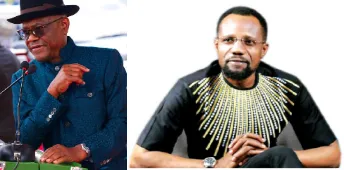
The deepening political crisis in Rivers State has returned to the centre of national attention, with fresh accusations flying within the Peoples Democratic Party as internal divisions continue to widen. The latest comments came from Mazi Nnamdi Dickson-Iroegbu, a prominent PDP chieftain, during an appearance on Arise Prime Time aired on Friday, January 23, 2026.
Reacting to the prolonged turmoil in Rivers State, Dickson-Iroegbu launched a stinging attack on former governor Nyesom Wike, describing his political conduct as destructive to the party that nurtured his rise. “Wike attempted to burn down the house that built him, that gave him leverage to even become minister. So that’s the PDP,” he said.

The remark has since sparked widespread debate, reflecting the bitterness within the PDP following a power struggle that has effectively split the party in Rivers State into two rival camps. One faction remains loyal to Governor Siminalayi Fubara, while the other aligns firmly with Wike, who remains one of the most influential political figures in the state despite leaving office.
The crisis escalated sharply after a failed attempt to impeach Governor Fubara, a move that was stalled by court orders and allegations of political interference. Since then, the impeachment process has remained in limbo, leaving Rivers State locked in a prolonged period of political uncertainty and administrative tension.
Read also:
- PDP governors meet in Port Harcourt, plans to rescue Nigeria
- Stop Distracting Amaechi, Ikwerre Youths Warn Ijaw Youths
- Primate Ayodele Releases New Prophecies Concerning 2023 Elections
Dickson-Iroegbu’s comments echo the sentiments of party members who believe Wike’s actions amount to a betrayal of the PDP. According to them, the former governor has turned against the same political platform that propelled him from state politics to the national stage and secured his appointment as a minister. The metaphor of “burning down the house” was used to illustrate what they see as deliberate efforts to weaken the party from within.
Political analysts note that Wike’s continued influence over sections of the state’s political structure has been a major factor in the ongoing instability. Supporters of the former governor argue that he is defending party principles and resisting attempts to sideline him, while critics insist his moves are driven by personal ambition and have fractured party unity.
According to Iroegbu, Beyond Rivers State, the crisis poses a broader challenge for the PDP nationally. As the opposition party works to rebuild its strength ahead of the 2027 general elections, internal conflicts in strategic states like Rivers threaten to undermine its credibility and electoral prospects.
Dickson-Iroegbu’s intervention highlights a party still struggling to manage internal disagreements and serves as a warning about the cost of unresolved power struggles. As PDP leaders search for a path to reconciliation, residents of Rivers State remain caught in the middle of a political standoff with no clear end in sight.