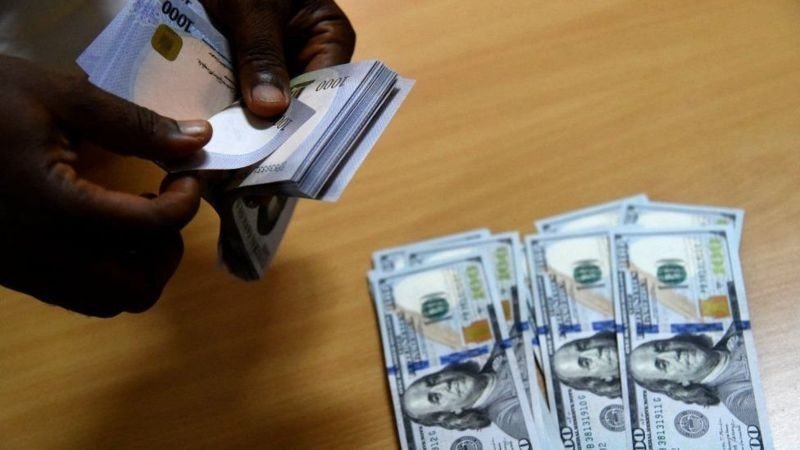
The Nigerian naira has weakened slightly against the United States dollar in early trading on Thursday, January 22, 2026, as activity in the foreign exchange market reflected routine mid-week demand pressures.
Although the local currency continues to trade within the relatively stable range observed this month, modest movements were recorded across both the official and parallel markets, highlighting ongoing price adjustments.
At the Nigerian Foreign Exchange Market (NFEM), the naira opened at ₦1,419.37 to the dollar. As trading progressed into the mid-morning session, the rate edged lower, with the dollar exchanging at about ₦1,421.33, representing a marginal depreciation of approximately 0.14 per cent.

Market analysts attribute the movement to a mild correction following gains recorded earlier in the week, as corporate dollar demand was weighed against foreign currency supply from the Central Bank of Nigeria (CBN).
Despite the intraday weakness, the official exchange rate has remained close to the ₦1,420 level, supported by improved foreign reserves and steady crude oil export earnings.
In the parallel market, similar minor adjustments were observed. Currency traders in Lagos and Abuja quoted the dollar between ₦1,482 and ₦1,495, slightly higher than the previous day’s average, amid sustained retail demand.
Read also:
- Fuel scarcity ends with subsidy era, Dangote Refinery delivers World-Class petrol, assures Nigerians of price stability
- Oil Producers caught in massive scandal, as PETROAN exposes 500,000 barrel daily crude diversion
- NAGAFF was founded to revolutionise Nigeria’s freight forwarding industry, says Ezisi
Dealers noted that the relatively narrow gap between the official and parallel market rates suggests continued progress in the government’s exchange-rate harmonisation efforts. The uptick in the informal market was largely linked to increased demand from small-scale importers restocking for the first quarter.
As of Thursday, the NFEM opening rate stood at ₦1,419.37, with the prevailing trading average around ₦1,421.33, while the parallel market average hovered near ₦1,488 across major cities.
Market watchers will be monitoring the week’s closing figures to assess whether the naira can strengthen below the ₦1,420 threshold. With inflation expectations for 2026 moderating and balance-of-payments indicators remaining positive, analysts maintain a cautiously optimistic outlook for the currency despite short-term fluctuations.