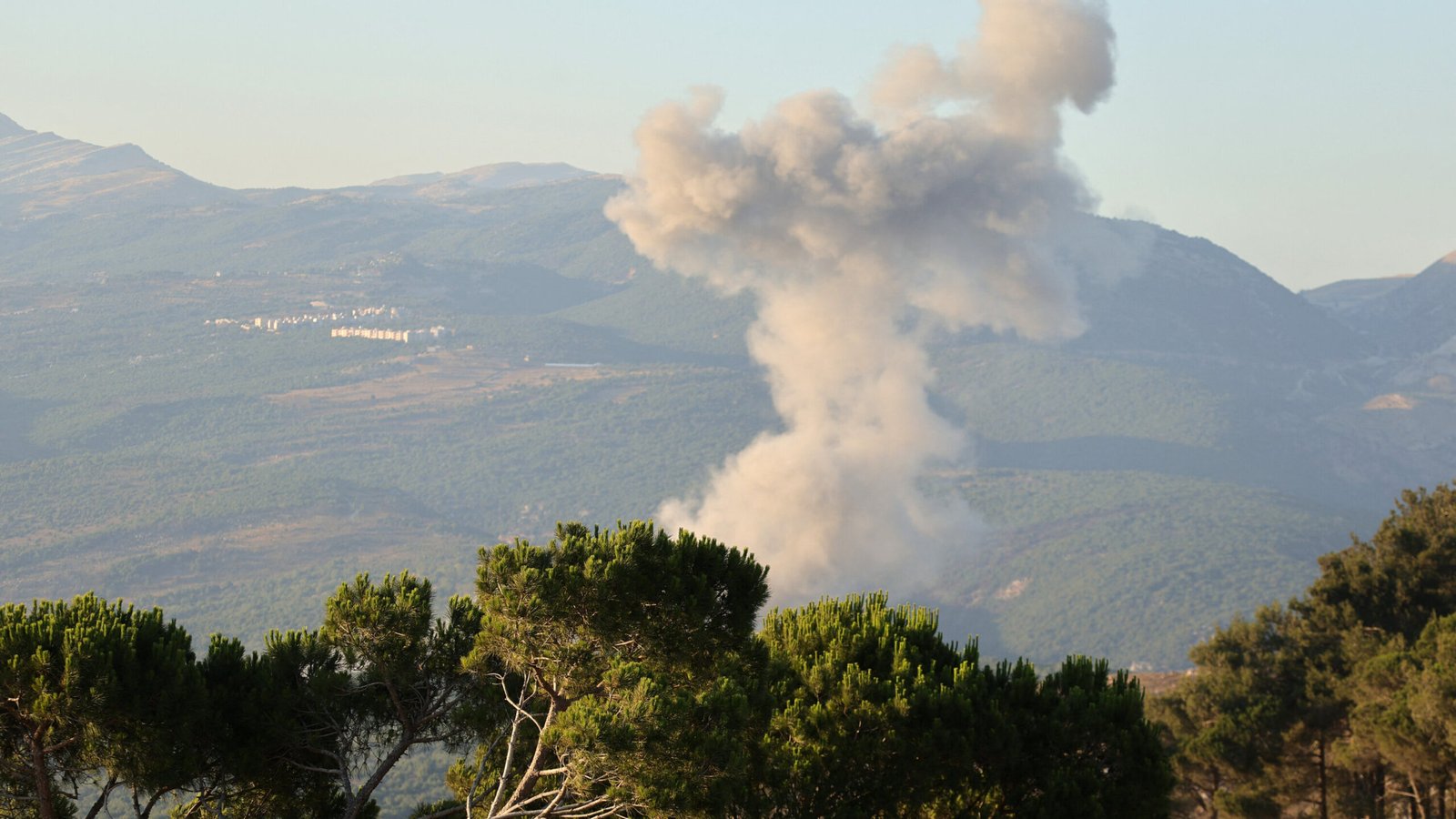
A fresh wave of Israeli airstrikes across southern Lebanon on January 21, 2026, has raised serious concerns about the fragility of the ceasefire between Israel and Hezbollah. The attacks, targeting villages including Qanarit, Jarjouh, Kfour, Ansar, and Khraibeh, left at least two dead and 19 injured, among them several journalists covering the escalation.
The strikes mark the latest episode in a series of intermittent Israeli operations, more than a year after a U.S.-brokered truce took effect in November 2024. Israeli officials insist the attacks are aimed at preventing Hezbollah from rearming and rebuilding military positions south of the Litani River. Lebanese authorities and Hezbollah, however, condemned the strikes as blatant violations of the truce, warning that the operations undermine border stability and put civilians at risk.

Lebanon’s Ministry of Public Health reported that 19 people were wounded in Qanarit alone, including eight journalists hit by shrapnel. Several buildings were destroyed despite Israeli evacuation warnings issued through leaflets and social media. State media captured plumes of smoke rising from the targeted villages as residents scrambled for safety.
In separate incidents, Israeli drones struck vehicles in Sidon and Tyre districts, killing two individuals identified by Israel as Hezbollah operatives allegedly involved in weapons smuggling. One strike hit a vehicle in Burj al-Shimali, while another targeted the Zahrani area farther from the border zone. Israel also bombed four border crossings with Syria, claiming these were used by Hezbollah to move weapons from Iran-backed allies. The Israeli Defense Forces said the operations disrupted smuggling routes and eliminated key targets in the Hermel area.
Read Also:
- Israel kills top Hezbollah official in Beirut
- Hundreds of ex-Israeli security officials write Trump to help end Gaza war
- Europe is prepared to act with urgency over Greenland, EU chief says
Social media footage from the villages showed residential buildings collapsing under the bombardment. Residents voiced outrage over the destruction. One woman from Jarjouh said her home was gone but emphasized the resilience of her community, noting that the safety of young people and communal dignity mattered most.
The Israeli military framed the strikes as defensive measures against Hezbollah’s alleged ceasefire violations. The IDF cited the group’s use of civilian areas for military purposes and warned that Hezbollah’s presence south of the Litani River posed a threat to Israel. Israeli spokesperson Avichay Adraee described the Sidon strikes as preemptive actions to enforce the truce.
Lebanese officials strongly criticized the attacks as aggressive and destabilizing. The health ministry and local media highlighted the civilian toll, pointing out that the strikes occurred in areas controlled by the Lebanese army. Hezbollah has not yet responded to the January 21 strikes, though previous statements accused Israel of exploiting the ceasefire as cover for continued occupation.
Reports also indicate that Israel has not fully withdrawn from southern Lebanon, maintaining forces at five strategic border positions despite the ceasefire’s requirement for a full pullout by January 2025. Beirut has called for international enforcement of UN Security Council Resolution 1701, which underpins the truce.
The ceasefire, mediated by the United States in November 2024, ended conflict that began in October 2023 alongside Israel’s war in Gaza. It required Hezbollah to withdraw north of the Litani River, the Lebanese army to secure the south, and Israel to vacate occupied territories. Implementation has been inconsistent, with mutual accusations of violations leading to daily skirmishes. Since the truce, Israeli strikes have intensified, citing intelligence on Hezbollah rearmament via Syrian routes, while Hezbollah has sporadically fired rockets or anti-tank missiles. Health ministry data shows over 435 deaths in Lebanon since November 2024 and significant displacement along the border.
International observers, including UNIFIL peacekeepers, have documented breaches by both sides but highlighted Israeli airstrikes as the primary driver of the current escalation. The United Nations has called for restraint, warning that ongoing violations could unravel the fragile peace.
Analysts caution that these developments expose the vulnerability of the Israel-Lebanon border, where unresolved issues like disarmament, border demarcation, and external influence from Iran and Syria hinder de-escalation. For Lebanon, the airstrikes exacerbate existing economic and political crises, while Israel faces domestic pressure to neutralize Hezbollah threats amid broader regional tensions involving Gaza and Syria.
As of January 22, 2026, Hezbollah has not launched major retaliatory attacks, but the situation remains volatile. Diplomatic efforts led by U.S. and French mediators are ongoing, yet a breakthrough to stabilize the border remains uncertain.