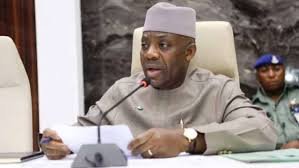
Minister of Education, Maruf Alausa, has called for a sweeping transformation of the country’s polytechnic education system, declaring that innovation, good governance, and sustainability must become the pillars driving national development.
Alausa made the call on Wednesday in Abuja, while speaking at a retreat organised by the Conference of Heads of Polytechnics, Colleges of Education and Similar Institutions (COHEADS) for council chairmen, commissioners of education, rectors, registrars, and bursars.

Speaking on the theme: “Transforming polytechnic education in Nigeria: Innovation, good governance and sustainability for national development,” the minister said polytechnics were central to Nigeria’s economic survival and industrial future.
“Polytechnics are not mere institutions; they are the crucibles where innovation meets practicality, where skills forge economic resilience, and where sustainable development becomes a lived reality for our nation,” Alausa said.
Read also:
- RUGIPO staff, son docked for assaulting a neighbour
- Obaseki congratulates Rector on election as Fellow of African Academy of Sciences
- Nasarawa Government urges striking Lecturers to resume classes as students remain idle
He disclosed that the Federal Ministry of Education was prioritising the revitalisation of Technical and Vocational Education and Training (TVET), with a focus on equipping graduates with practical, industry-ready skills.
“We have adopted a policy that ensures our polytechnic graduates are innovative problem-solvers capable of driving national development,” he stated.
The minister urged polytechnic managers to strengthen entrepreneurship, research, and industry collaboration, stressing that innovation must be at the core of polytechnic education.
“Innovation must be the heartbeat of our polytechnics. I urge you to foster entrepreneurship centres, research hubs, and industry partnerships that turn ideas into prototypes and inventions into enterprises that will graduate into job creators,” he said.
Alausa identified renewable energy, agricultural technology, digital manufacturing, and climate-resilient solutions as priority sectors for research and innovation.
On governance, the minister issued a stern warning against corruption, calling for transparency, accountability, and ethical leadership across polytechnics.
“Governing councils and management teams must uphold transparency, accountability, and ethical leadership.
“Avoid conflicts of interest, ensure prudent resource management and prioritise merit in appointments and promotions,” he said.
Declaring that impunity would no longer be tolerated, Alausa added, “The era of impunity in our institutions is over. We demand fiscal discipline, timely audits, and zero tolerance for corruption to build public trust and attract investment.”
He also encouraged institutions to explore sustainable funding through Internally Generated Revenue (IGR) and reduced dependence on imports.
While acknowledging long-standing challenges such as funding gaps, outdated facilities, and societal bias favouring university degrees over technical education, the minister expressed optimism that government support was increasing.
Alausa further announced a special intervention by the Tertiary Education Trust Fund (TETFund) to upgrade polytechnic engineering schools with modern equipment, following similar interventions in medical colleges last year.
Chairman of the COHEADS, Sani Tunga, described the retreat as timely, noting that polytechnics and colleges of technology remained critical to Nigeria’s development.
“Our polytechnics stand at the forefront of producing skilled, innovative, and entrepreneurial manpower needed to drive Nigeria’s diversification agenda, reduce unemployment, and achieve the Sustainable Development Goals,” Tunga said.
He, however, listed persistent challenges facing the sector, including inadequate funding, obsolete infrastructure, weak governance, changing industry demands, and sustainability concerns.
Tunga also raised alarm over recurring conflicts within the system, particularly between governing councils and management, and between management and staff unions such as ASUP, SSANIP, and NASU.
Executive Secretary of the National Board for Technical Education (NBTE), Prof. Idris Bugaje, said Nigeria’s polytechnic and technical education sector was finally witnessing renewed attention after decades of neglect.
Prof. Bugaje traced the history of technical education in Nigeria, noting that it predates university education but was sidelined after independence, especially following the civil war.
“We have only 153 technical colleges compared to over 15,000 senior secondary schools in Nigeria today. For years, we were struggling to survive in a very unfriendly system,” he said.