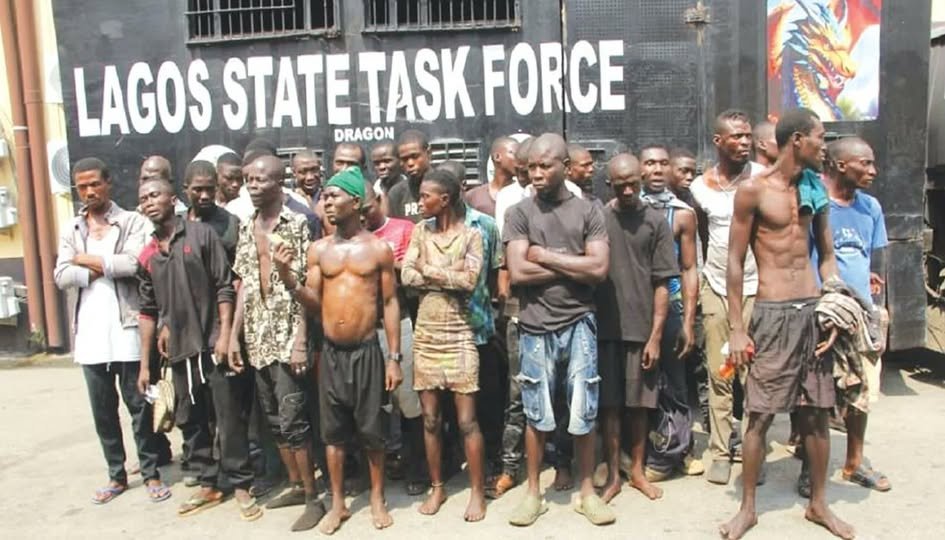
The Lagos State government has arrested 281 street urchins, popularly known as ‘Omotaku,’ in a sweeping enforcement operation across major parts of the state, as authorities intensify efforts to clear public spaces and enforce environmental laws.
The arrests were carried out by the Lagos State Taskforce during a week-long operation that spanned key commercial and residential corridors on both the Mainland and Island.

Confirming the development on Saturday, the Commissioner for Environment and Water Resources, Tokunbo Wahab, said the arrested persons had already been arraigned in court.
Wahab noted that the operation covered areas including Lekki Phase 1, Ikoyi, Lekki–Ajah Expressway, Bourdillon Road, Animashahun Bus Stop, Akowonjo Road, Egbeda, Fadeyi Bus Stop, Costain, Funsho Williams Avenue, Victoria Island, Apongbon, Jibowu, Yaba, Lagos Island, Palmgrove, Ojuelegba, Surulere and other adjoining locations.
“The exercise is part of our ongoing efforts to keep roads and public spaces clear, reduce safety risks to motorists and pedestrians, and maintain environmental sanity across Lagos State,” Wahab said in a post on X.
The commissioner urged residents to report activities of street urchins and other forms of public nuisance, providing emergency contact numbers for rapid response.
Read also:
- NIWA inaugurates search, rescue centre in Lagos State
- Lagos State Safety Commission Shuts Down More Nightclubs
- Father cries out for justice as nine-month-old twin boys die after immunisation in Lagos
The arrests form part of a broader clampdown by the Lagos State government on street begging, illegal occupation of roadways and activities considered disruptive to public order.
Similar operations in the past have drawn criticism from rights groups, who argue that the government often treats social welfare issues as law enforcement problems.
Despite repeated enforcements, street urchins and beggars continue to resurface across major Lagos corridors, raising questions about the sustainability of the approach and the absence of long-term rehabilitation and social support measures.
Lagos authorities, however, insist that the crackdown is necessary to curb rising insecurity, traffic hazards and environmental degradation in Africa’s most populous city.