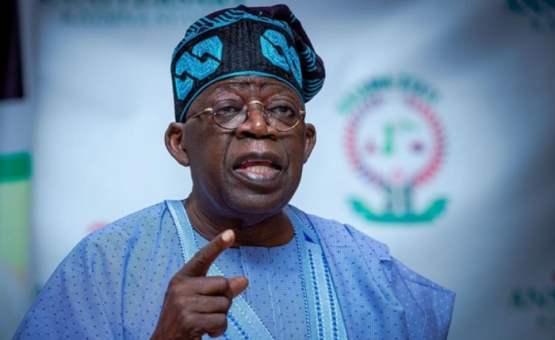
President Bola Ahmed Tinubu has approved the full implementation of Nigeria’s groundbreaking carbon market framework, a climate policy projected to generate at least $3 billion in annual revenue by 2030.
The announcement came on Thursday through the President’s Special Assistant on Social Media, Dada Olusegun, who revealed the development via his verified X handle, describing it as a “decisive move to position Nigeria as a dominant force in the global carbon trading ecosystem.”

The carbon market framework is designed to drive large-scale trading in emission allowances across key industries, creating new income streams for the country while strengthening Nigeria’s commitment to reducing carbon emissions. Under the plan, the Federal Government will establish a national carbon registry, compel companies to report their emissions, and introduce phased compliance mechanisms to meet Nigeria’s climate commitments.
The policy also outlines interim emission reduction targets for 2035 and charts a long-term pathway toward achieving net-zero emissions by 2060, aligning Nigeria with global sustainability goals. To attract investors, the framework provides robust incentives such as up to ten years of tax exemptions on carbon-credit earnings, accelerated capital allowances for low-carbon assets, and research deductions for climate innovation projects.
Read Also:
- Atiku demands immediate release of detained Tinubu critic
- Tinubu, Shettima, and aides set to spend N12.2bn on travel in 2026
- Taraba youths urge Tinubu to intervene in Federal University, Wukari leadership crisis
Analysts say these measures will remove key hurdles that have hindered carbon investment in the past while positioning Nigeria as a credible destination for green finance and sustainability-linked investments. The initiative marks a major step in Tinubu’s broader economic strategy to diversify national revenue sources, integrate environmental responsibility into development planning, and capture value in the fast-growing international carbon economy.
By embedding climate policy into economic governance, the Tinubu administration seeks to balance growth with environmental stewardship, a move many observers believe could redefine Nigeria’s role in the global climate agenda and reinforce its transition toward a sustainable, green economy.