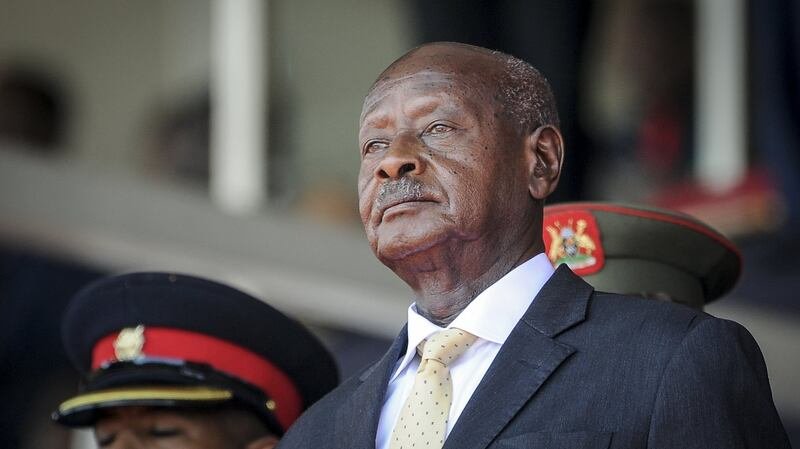
Ugandan President Yoweri Museveni has announced his intention to seek a seventh term in office, a move that would extend his rule to almost four decades and cement his place among Africa’s longest serving leaders.
Museveni, now 81, came to power in 1986 after leading a rebel movement that toppled a military government. At the time, he pledged sweeping political reforms, an end to corruption and a break from the cycles of instability that had plagued Uganda for years.

Nearly 40 years later, those early promises are increasingly questioned by critics who point to entrenched corruption, weakened democratic institutions and an expanding concentration of power around the presidency.
Museveni has won all six elections he has contested, though opposition parties have repeatedly challenged the results, alleging widespread electoral malpractice. The government has consistently rejected those claims, while security forces have often moved forcefully to quell protests that followed disputed polls.
Supporters of the president argue that his long tenure has brought a measure of stability to Uganda. His administration is credited with early and effective action against HIV and AIDS, military efforts that weakened the Lord’s Resistance Army, and Uganda’s role in regional peacekeeping missions in Somalia and South Sudan. The country also hosts one of the largest refugee populations on the African continent.
Despite these achievements, allegations of corruption continue to shadow his government. Parliamentary reports have accused senior officials and individuals close to the presidency of benefiting from controversial privatisation deals, even as critical public services struggle with chronic underfunding.
Read also:
- Greenland rejects US annexation push as PM says territory chooses Denmark over Washington
- Ibom Deep Seaport project gathers momentum as government signs fresh agreement
- Prosecutors seek death penalty for ex-South Korean president Yoon
Museveni has acknowledged that corruption remains a problem but insists that officials found culpable are prosecuted. Critics, however, argue that enforcement is selective and rarely reaches the highest levels of power.
Economic growth under his leadership has not translated into broad improvements in living standards. UNICEF data shows that only one in four Ugandan children who start primary school make it to secondary education, while unemployment and underemployment remain widespread, particularly among young people.
In 2005, Uganda’s parliament removed presidential term limits, a decision widely seen as clearing the path for Museveni to remain in office indefinitely. That constitutional change continues to fuel debate about the health of Uganda’s democracy.
Museveni’s main challenger in the forthcoming election is 43 year old opposition figure and popular musician Bobi Wine. While most analysts expect the incumbent to retain power, the contest has intensified concerns about leadership succession as Museveni advances in age.
Attention has increasingly focused on his son, Muhoozi Kainerugaba, the army chief, whose rapid rise through the military ranks has sparked speculation about a possible dynastic transition. The government has repeatedly dismissed suggestions of a planned handover within the family.
Observers say the election may ultimately be less about who wins and more about public sentiment, political legitimacy and the direction Uganda will take as it confronts questions about leadership, governance and its future beyond Museveni’s long rule.