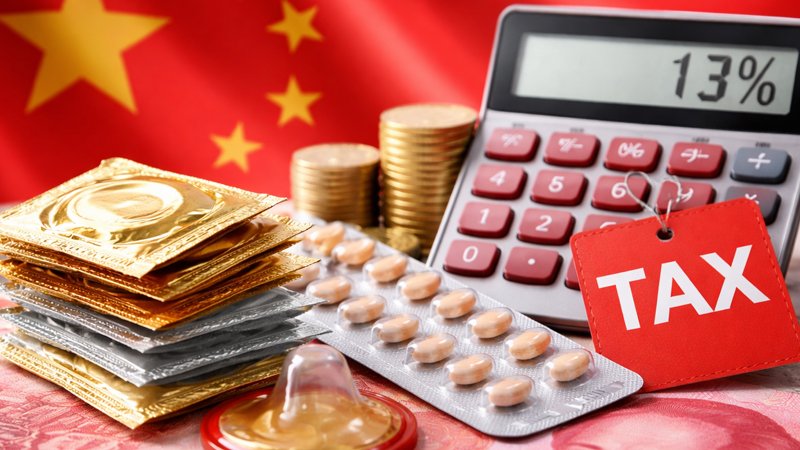
China has announced a 13 percent tax on condoms and contraceptives as part of a broader effort to address its declining birth rate, ending over three decades of tax exemptions on birth control products. The new levy took effect on January 1, 2026, marking a major policy shift in the nation’s approach to family planning and population management.
The decision comes as China records a decline in population for the third consecutive year since 2024, sparking concerns about the future workforce and long-term economic growth. Analysts say the government hopes that the revenue generated from the China tax on condoms and contraceptives will support social programs designed to encourage higher fertility rates.

Read Also:
- China imposes sanctions on 20 US defense firms after arms deal with Taiwan
- China moves to grant Nigeria early zero tariff access in major boost for export growth
- China halts port fees on US Ships as trade agreement holds
In addition to the tax, Chinese authorities have introduced multiple China population decline measures, including a 90 billion yuan childcare subsidy program and an annual allowance of 3,600 yuan per child under the age of three starting in 2025. These initiatives aim to ease the financial burden on families and incentivize childbearing after decades of the one-child policy, which was enforced from 1980 to 2015.
Officials have expressed optimism that the combination of fiscal policies and family support programs will help mitigate the population decline while promoting economic stability. “These China population decline measures are designed to provide meaningful support to families and ensure sustainable demographic growth in the coming years,” a government spokesperson said.
With this historic shift, China is signaling a new era in its demographic strategy, balancing regulatory measures with incentives to foster a more sustainable population trajectory.