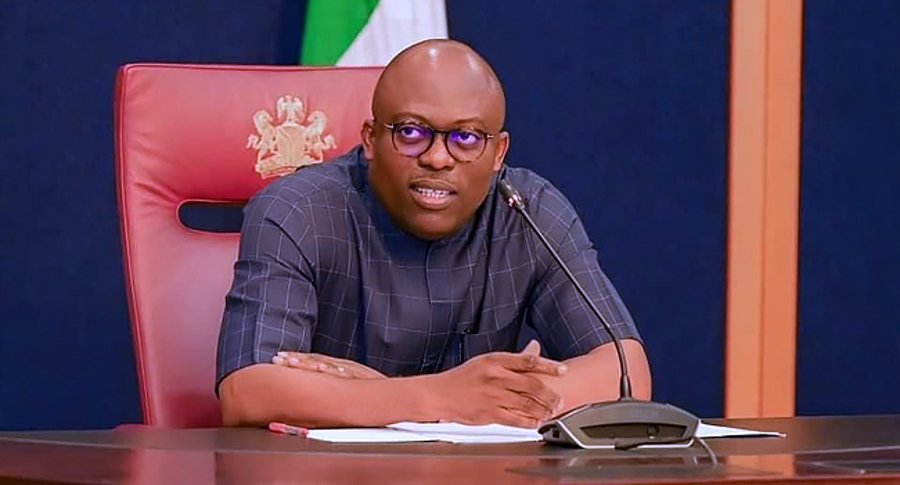
Rivers State Governor, Sir Siminalayi Fubara, has boldly declared 2026 as a year of “complete liberation” for the oil-rich state, signaling a turning point after two years of intense political turbulence, legal battles, and administrative challenges.
In statements delivered during the New Year banquet at the Government House Banquet Hall in Port Harcourt on January 1, 2026, and reinforced in his New Year message following a crossover service at the Chapel of Everlasting Grace, Governor Fubara expressed renewed optimism and spiritual resolve. He assured residents that his administration would fulfill all set goals, emerge stronger from past trials, and usher in an era of progress, peace, and full realization of governance objectives.

The governor’s use of the term “liberation” appears to encapsulate both political emancipation from prolonged distractions and developmental freedom to accelerate infrastructure, economic, and social initiatives without the encumbrances that marked 2024 and 2025.
“2026 would usher in what he described as ‘complete liberation’ for the state,” multiple reports quoted him as saying, “assuring that all the goals set by his administration would be accomplished.”
Read Also:
- May Day: Gov Fubara felicitates with Rivers workers, urges resilience amids disruption of democratic governance
- Rivers crisis: I won’t abuse my powers – Gov Fubara
- Gov Fubara presents N1.188Trn 2025 budget to RSHA
A Year of Consolidation and Realignment
The declaration came amid a significant political realignment in Rivers State. Governor Fubara announced that prominent former Peoples Democratic Party (PDP) leaders, including ex-PDP National Chairman Uche Secondus, former Deputy Speaker of the House of Representatives Austin Opara, former Rivers Governor Celestine Omehia, and ex-Minister of Transport Abiye Sekibo, had reunited in support of his leadership and pledged backing for President Bola Ahmed Tinubu’s 2027 re-election bid.
This development marks a strategic consolidation, dispelling earlier narratives of division within the state’s political landscape and reinforcing Fubara’s alignment with the federal government. The governor emphasized that such support proved his loyalty and dismissed any attempts at blackmail or misrepresentation of his stance.
Fubara reflected on the journey so far, acknowledging that the past two years were “not easy” but had strengthened his resolve. “The battles we could not fight have ultimately strengthened us,” he noted, urging supporters to stand on the side of truth and assuring them they would walk with “shoulders high” in pride.
A recurring theme in the governor’s New Year addresses was the rejection of political confrontation. He repeatedly urged Rivers people to ignore “sounds of war” and “instruments of war,” insisting that his leadership relies on prayer rather than aggression. “We do not have the instrument of war; the only thing we have is our knees, and we will continue to pray to God,” Fubara declared.
He dismissed fears of renewed political turmoil, assuring that “Rivers will not descend into another round of political war” and that the state would not be defined by crisis in 2026.
This message of peace and stability comes against the backdrop of lingering tensions, including past disputes over local government administration, assembly functions, and budget processes, issues that had slowed governance but from which the administration claims to have emerged resilient.
Governor Fubara framed 2026 as a year of visible progress, with governance continuing “with full force” to recover lost ground and deliver on promises. His administration’s philosophy remains anchored in faith, perseverance, accountability, and selfless service.
He expressed confidence in divine intervention, echoing the sermon by Government House Chaplain Pastor Ogan Barasin, who described 2026 as a year of “visible and tangible miracles” for those who trust and obey God.As Rivers State steps into this declared year of liberation, the governor’s words carry weight both for his supporters, who see it as validation of their endurance and for observers monitoring how political stability translates into tangible development in one of Nigeria’s most strategic states.
Whether 2026 truly becomes a watershed year of liberation will depend on the fulfillment of these assurances amid ongoing national and state-level dynamics. For now, Governor Fubara has set an ambitious, hopeful tone for the months ahead.