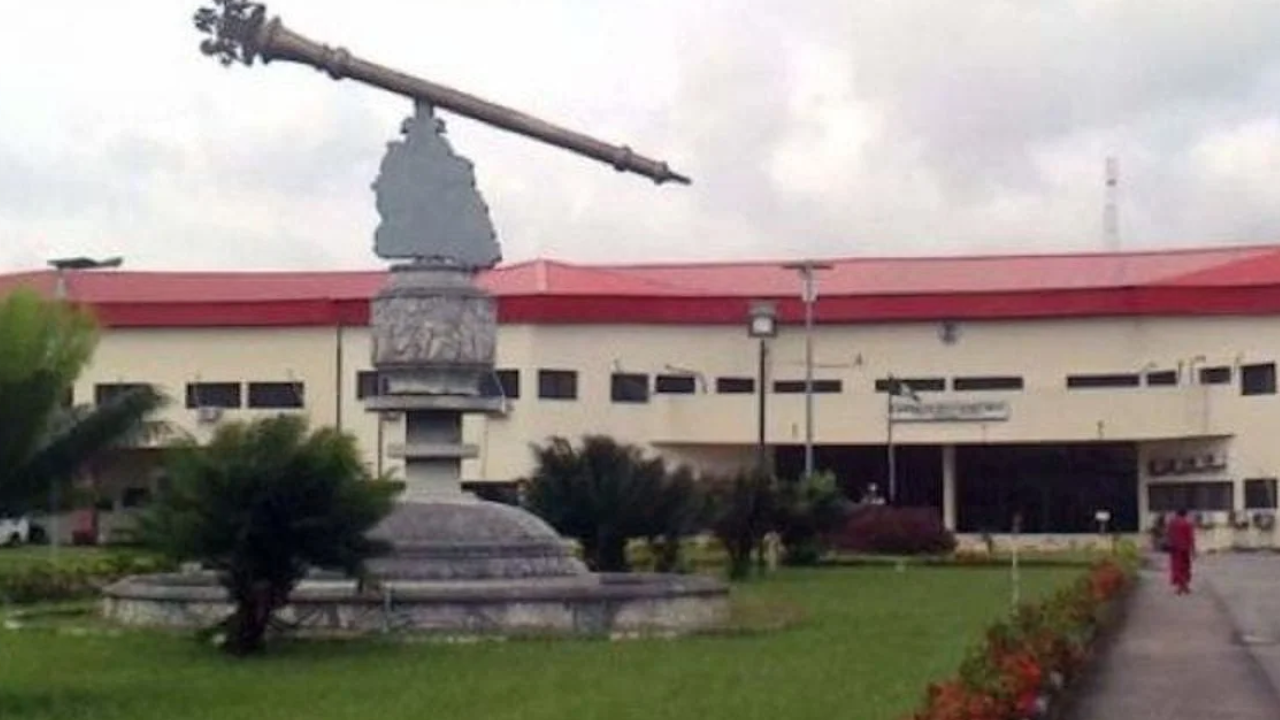
A socio-political group, the Ibom Grassroots Development Initiative (IGDI) has applauded the Akwa Ibom State House of Assembly for rejecting a bill proposed by the Akwa Ibom Internal Revenue Service (AKIRS) that sought to transfer the collection of key taxes, including those belonging to local governments to the state government.
The convener of the group, Felix Ukpong, described the lawmakers’ decision as timely and patriotic, noting that the bill contained serious anomalies that could undermine the financial independence of local government councils.

Ukpong warned that if the bill had been passed into law, it would have weakened fiscal transparency and eroded the constitutional powers of local councils as guaranteed under the Local Government Autonomy Act.
In a communiqué issued at the end of an emergency meeting, and jointly signed by Ukpong and the group’s Secretary, Ekpono Lawrence, IGDI criticized what it described as undue haste in the drafting and presentation of the bill.
The group also faulted the absence of public consultation and deliberation, describing the process as a violation of the constitutionally defined tax framework.
Read also:
- CHRAN gives nod to proposed map of A’ Ibom
- A’Ibom Gov-elect, Deputy, 26 lawmakers-elect get cert. of return
- A’ Ibom govt builds 168 blocks in memory of fallen heroes
The proposed legislation, titled: “State Harmonised Taxes and Levies (Approved List for Collection) Bill, 2025,” was reportedly initiated by the Chairman of the State Board of Internal Revenue, Mr. Okon Okon, in collaboration with his counterparts from other states.
According to Ukpong, the initiative was part of a broader strategy to lobby the National Assembly’s constitutional review committee to amend the constitution in a way that would transfer key revenue functions from local governments to state governments.
“The ultimate aim is to ease the passage of such a bill into law, despite its grave implications for the fiscal autonomy of local government councils,” the group stated.
Sources within the state House of Assembly revealed that the bill was rejected due to the negative impact it could have had on local government economy.
They noted that the proposed harmonisation would have allowed state governments to take over several lucrative local government revenue sources.
These include tenement rates, customary rights of occupancy fees, building permit levies, ground rent, land use charges, neighborhood improvement charges, and infrastructure development levies.