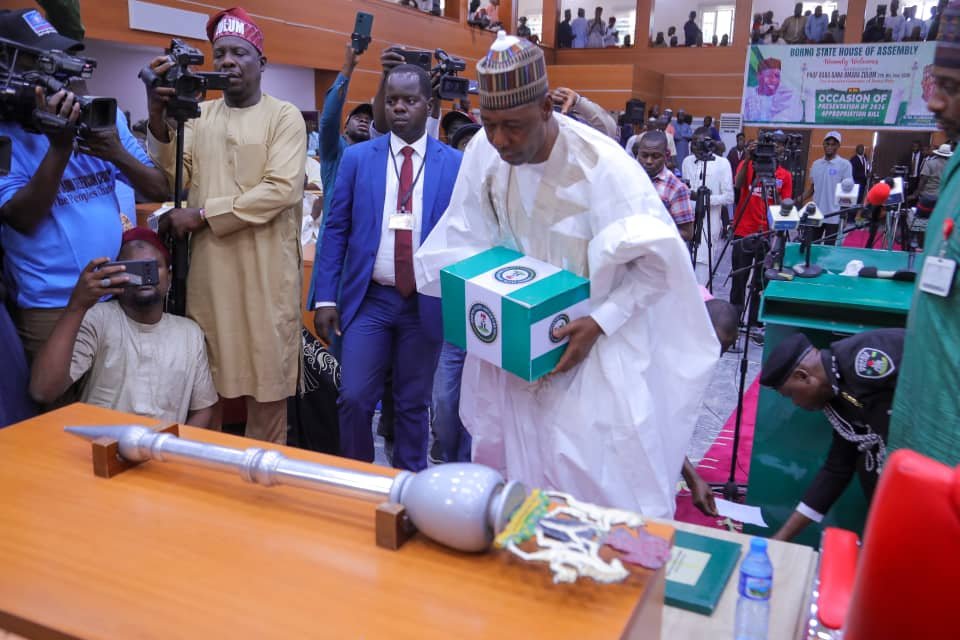
Governor Babagana Umara Zulum of Borno State on Monday presented a proposed N899.33 billion budget for the 2026 fiscal year to the state House of Assembly, with education receiving the highest allocation of N135 billion.
The proposal, tagged the “Budget of Sustained Recovery and Growth,” allocated more than 61 per cent of total spending to capital expenditure, while recurrent expenditure accounts for about 39 per cent.

According to the governor, the budget comprises N353.77 billion for recurrent expenditure and N536.56 billion for capital projects, reflecting his administration’s focus on infrastructure development and long-term recovery following years of insurgency.
Addressing lawmakers, Gov. Zulum said the budget was designed to consolidate gains in rebuilding communities, reviving the economy and improving security across the state.
“This budget stands as a testament to our steadfast dedication to fostering sustained recovery and growth. It reflects our commitment to rebuilding communities, restoring economic vitality and securing a safer and more prosperous future for our people,” he said.
Read Also:
- Zulum condemns Maiduguri mosque attack, urges vigilance
- Zulum disburses N1bn, trains 1,050 youths on GSM repairs
- Gov. Zulum expands educational support for students, refugees in Cameroon
A breakdown of sectoral allocations showed that the education sector topped the list with N135.43 billion, earmarked for the construction and rehabilitation of schools, teacher recruitment and scholarship programmes.
The works and housing sector received N94.27 billion for the construction of urban and rural roads, bridges and housing projects, while the health sector was allocated N66.41 billion for hospital projects and the procurement of essential drugs.
Other major allocations include N58.71 billion for the Ministry of Reconstruction, Rehabilitation and Resettlement to support the return of internally displaced persons, N44.95 billion for agriculture to boost food security, and N21.35 billion for water resources.
The Ministry of Information and Internal Security also received funding to consolidate security and public information initiatives.
On the revenue side, the governor projected N317.69 billion from the Federation Account, N44.30 billion from internally generated revenue, and N417.23 billion from capital receipts, including grants, aid and the Capital Development Fund.
In his response, Speaker of the House, Abdulkarim Lawan, assured the governor that the Assembly would give the proposal prompt and thorough consideration to ensure it meets the developmental needs of the state before passage.