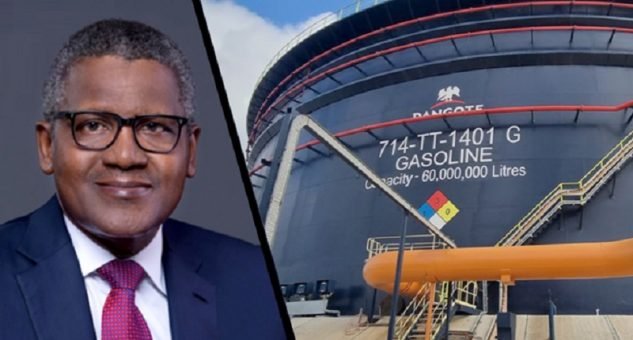
The Dangote Petroleum Refinery has reduced the minimum order quantity for Premium Motor Spirit, popularly known as petrol, to 250,000 litres, intensifying an already fierce price battle in Nigeria’s downstream oil sector. The decision, taken days before the Christmas holidays, is aimed at widening access to cheaper locally refined fuel and weakening the grip of importers who have long dominated the market.
The Lekki-based refinery, owned by industrialist Aliko Dangote, had previously set the minimum purchase level at 500,000 litres, with earlier phases reaching as high as two million litres. By lowering the threshold, the refinery is opening its doors to smaller independent marketers who were previously shut out by volume requirements. Industry watchers say the move is calculated to flood the market with Dangote fuel and force competitors into painful price adjustments.
Africa’s largest single-train refinery, with a capacity of 650,000 barrels per day, has become central to Nigeria’s fuel supply since it began large-scale operations in late 2023. It is currently supplying about 23.52 million litres of petrol daily, close to half of the country’s estimated 50 million litre daily demand.

The latest move follows a string of aggressive price cuts that have reshaped fuel pricing nationwide. On December 12, 2025, the refinery reduced its gantry price from N828 to N699 per litre, marking the 20th downward review this year. The impact was immediate. Hundreds of fuel trucks began queuing daily at the refinery as marketers rushed to secure cheaper supplies, encouraged by incentives including a 10-day credit facility backed by bank guarantees.
Retail prices soon followed the downward trend. In Lagos, filling stations linked to Dangote’s lead distributor, MRS Oil Nigeria Plc, adjusted pump prices to about N739 per litre, down from around N885 recorded weeks earlier. Across major cities, petrol now sells between N730 and N740 per litre, although prices remain higher in parts of the north and southeast due to transportation costs and seasonal demand. In Abuja, some outlets have cut prices from over N900 to about N865 per litre.
Dangote has openly warned marketers against exploiting consumers. Speaking in Lagos earlier this month, he said no filling station should sell petrol above N740 per litre nationwide, accusing some operators of hoarding gains from lower wholesale prices. He reiterated that the refinery’s objective is to make energy affordable and accessible, adding that more than 4,000 Compressed Natural Gas trucks could be deployed to strengthen nationwide distribution if necessary.
The reduction of the minimum order size is being hailed as a turning point for independent marketers. Members of the Independent Petroleum Marketers Association of Nigeria have long complained of exclusion from direct refinery purchases. With the new 250,000 litre threshold, many of them can now buy directly from Dangote at the N699 gantry price. The association has already advised its members to prioritise the refinery, citing competitive pricing and the promise of free delivery beginning in January 2026.
While the policy offers relief to marketers and consumers, it has deepened the crisis for fuel importers and private depot owners. Imported petrol ex-depot prices remain above N824 per litre, making it difficult to compete with locally refined fuel. Several depots in Lagos have been forced to cut prices by small margins, but operators warn that shrinking profits and idle facilities could become the norm if the trend continues.
Read also:
- NNPCL cuts petrol price to ₦835/litre as Dangote, others intensify price war
- Petrol queues resurface in Lagos as IPMAN members shut stations
- IPMAN, South-East residents kick over hike in petrol price
The rivalry has spilled into the public arena. Dangote recently accused the Nigerian Midstream and Downstream Petroleum Regulatory Authority of actions he described as economic sabotage, prompting the House of Representatives Committee on Petroleum Resources to summon key players in the sector. At the same time, the Petroleum Products Retail Outlet Owners Association of Nigeria has raised concerns that relentless price cuts could strain cash flow for retailers without delivering lasting benefits.
For consumers, however, the timing is welcome. With inflation high and transport costs rising, cheaper petrol ahead of the festive season has brought some relief. Many Nigerians have taken to social media to praise the refinery’s impact, crediting it with succeeding where years of policy reforms failed.
As the Dangote Refinery continues to ramp up output, producing tens of millions of litres of petrol and diesel daily, analysts say the current price war could mark a lasting shift toward domestic fuel dominance. Whether competitors survive the pressure or the market settles into a new order, one thing is clear. Nigeria’s fuel business is being rewritten, and the effects are already being felt at the pump.