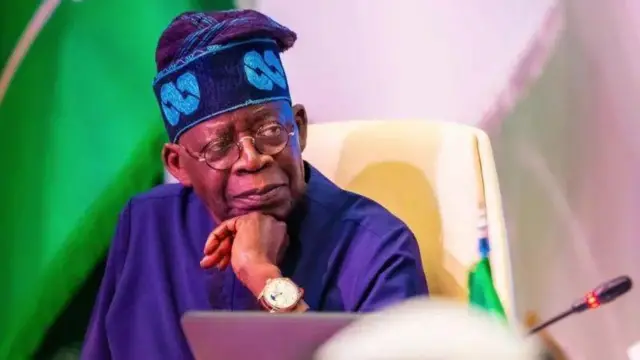
As President Bola Ahmed Tinubu enters the politically decisive midterm stretch of his administration, signals emerging from the Villa point to what insiders are describing as the most far-reaching cabinet overhaul since the Fourth Republic. He is expected to shake up no fewer than twenty ministries, a move driven by economic pressures, investor anxiety, northern political agitation, policy stagnation, anti-corruption optics, and the shadow of the 2027 election.
Tinubu, who came to office promising “Renewed Hope,” now confronts a stark governance reality: a public reeling from inflation, opposition voices gathering momentum, APC internal fractures widening, and key ministries underperforming or drowning in scandal. Cabinet seats that once looked secure are now rattling under scrutiny, Intelligence assessments, economic scoreboard reviews, and pressure from party elders, governors, and foreign partners.
This looming reshuffle extends beyond routine adjustments. It strikes at the heart of power blocs, political IOUs, campaign financiers, and regional balances that helped deliver his 2023 victory. The presidency has entered a phase where performance, optics, scandal management, security outcomes, and fiscal stabilization outweigh loyalty calculations.

A President Cornered by Economics, Inflamed Regions, and Fractured Party Blocs
The year began with Tinubu’s team insisting his reformist economic policies were on track. But inflation and naira volatility have since dragged consumer morale to historical lows. The presidency acknowledges privately that the administration no longer has the luxury of patience from citizens. The street, the business lobby, the civil service unions, and the northern political class are aligned in frustration.
With food inflation surging, subsidy removal still biting, and global markets resistant rather than receptive to Nigeria’s fiscal signals, the government sees a communication disconnect it must address before critics turn disillusionment into electoral revolt.
At the same time, insecurity continues to define the northern narrative—a narrative APC northern governors have repeatedly confronted the Villa about. They want a bolder Defence leadership, a firmer agricultural revival plan, and a pragmatic face to absorb northern fury.
This is the pressure cooker behind what has been dubbed the “Tinubu political surgery.”
The Ministers Under Heat: Scandals, Underperformance, and Public Backlash
Below is an examination of the twenty ministers most exposed as Tinubu prepares to recalibrate.
David Umahi — Works and Housing
Umahi remains one of the administration’s most visibly active figures. The Lagos–Calabar Coastal Highway has been his crown jewel project, yet also his greatest liability. Demolition of commercial strips, environmental pushback, and procurement opacity have piled controversy at his doorstep. Still, his speed of execution and fierce loyalty make him one of Tinubu’s top retainers.
If anything changes, it may be a rebalancing of oversight rather than removal. Umahi is a Tinubu asset, though one the presidency must occasionally manage.
Wale Edun — Finance
As the face of Nigeria’s market turbulence, Edun receives direct hits from every inflation spike and naira shock. He is perceived as a doctrinaire free-market purist, polite but disconnected from the realities of street economics. Labour unions, the northern establishment, and a growing faction of APC old guards blame his economic framework for public discontent.
Yet, for Tinubu, Edun remains irreplaceable: the fiscal strategist behind his post-Lagos technocratic identity. He will not go; rather, a new “economic stabilisation co-pilot” may surface to absorb public fury and donor anxiety.
Nyesom Wike — FCT
The most politically dramatic member of the cabinet, Wike has dominated Abuja with bulldozers, uncompromising zoning enforcement, and elite displacement. His demolition drive has angered property developers and civil servants, yet delighted rule-of-law purists who consider Abuja overdue for urban discipline.
The complication is not performance but politics. Wike’s rivalry with the north, control patterns, and media theatrics are viewed by Villa insiders as both useful and combustible. The calculation to retain him hinges on the 2027 map: Tinubu wants Wike to fracture PDP southern resistance, but remains wary of how much Abuja turbulence he can absorb.
Olubunmi Tunji-Ojo — Interior
Once hailed as a fresh reformer for cleaning up passport bureaucracy, Tunji-Ojo now faces allegation-driven turbulence tied indirectly to Betta Edu. While no formal indictment has landed, the optics have given the Villa reason to consider his redeployment—less as punishment, more as firewall separation.
Bello Matawalle — Minister of State, Defence
Matawalle, unlike Badaru, is not shielded by depth. Old investigations continue to shadow him, and security analysts describe him as “politically noisy but structurally discreet.” His removal would satisfy governors, calm military brass, and give Tinubu an anti-corruption posture without sacrificing a core loyalist.
Festus Keyamo — Aviation and Aerospace
Airlines grumble about regulatory aggression; airport concession disputes have unsettled powerful aviation investors. Keyamo’s legalistic style has not translated to broader airline diplomacy.
A reshuffle here would not signal failure but political pragmatism.
Read also:
- Southern Kaduna Journalists hail Tinubu for appointing Gen. Musa as Defence Minister
- FG, Imo launches South-East LPG programme
- Timi Frank accuses FG of shielding terror Sponsors, hails Trump for ‘doing what Nigerian leaders failed to do’
Dele Alake — Solid Minerals
Alake is not under threat despite rising illegal mining, Chinese extraction controversies, and cartel resistance. He is Tinubu’s oldest confidant in government. Performance concerns will not end his ministerial journey—not now, not ahead of 2027.
Femi Gbajabiamila — Chief of Staff
Though not technically a minister, Gbajabiamila remains central to the reshuffle calculus. Multiple factions accuse him of gatekeeping federal access to dangerous levels. The Villa’s internal lobbying narrative regularly links him to bottlenecks, allocation factions, and bureaucratic favouritism.
If Tinubu shockingly moves anyone with symbolic depth, it will be Gbajabiamila—either to cool political friction or reset access choreography.
Heineken Lokpobiri — Petroleum (State)
Oil theft remains rampant; Niger Delta communities are losing patience. Lokpobiri risks being replaced strictly for regional appeasement—a political rather than performance-driven exchange.
Ekperipe Ekpo — Gas
Global energy investors have complained of conflicting directives between Gas, Petroleum, and Finance policy arms. Ekpo could be merged out of relevance via ministry consolidation.
Atiku Bagudu — Budget and Planning
Budget opacity, rising debt ratios, and financial compartmentalization narratives have made Bagudu unpopular among both civil society and donor agencies. He is less likely to be fired than technically downgraded.
Mohammed Idris — Information and National Orientation
Information management is Tinubu’s Achilles heel. Amid hardship, the government appears aloof and unable to speak directly to citizens with empathy. Idris may be removed to recalibrate federal communication tone.
Abubakar Kyari — Agriculture
Agriculture is now both an economic and security ministry. With food inflation driving household crisis, Kyari faces near-inevitable replacement. Farmers remain displaced; grain reserves remain opaque.
For Tinubu, replacing Kyari is not policy—it’s survival.
Patterns Behind the Shake-Up
This is not merely a reform reshuffle. It is a political rescue operation engineered to protect Tinubu’s electoral viability.
Northern Balancing: Northern elites want agriculture, security, and food logistics re-engineered. The removal of Kyari, Matawalle, would signal northern appeasement—crucial ahead of 2027.
Investor Confidence: Finance reshuffles without firing Edun represent a balancing act aimed at calming markets without abandoning fiscal ideology.
Anti-Corruption Optics: Matawalle, and Tunji-Ojo represent easy symbolic purges that cost Tinubu little internally but score internationally.
APC Internal Truce: Ministers linked to factional dominance—especially those with gatekeeping reputations—may be rotated to soften internal hostility.
A Reshuffle to Reset 2027 Narratives
Tinubu’s renewal project now depends on what name leaves and what name enters. The administration must rebuild confidence without surrendering structural reforms. While loyalists whisper that Nigerians must “endure a little longer,” political realists argue that endurance is no longer a national mood.
The looming shake-up offers Tinubu a rare opportunity to reverse public frustration before it solidifies into electoral penalty. If he executes the transition with strategic calm—balancing loyalty with competency, optics with delivery, and reform with empathy—his presidency may reset public perception.
If not, the cabinet will not be the only casualty.
The ministers who may fall are not necessarily the weakest, and those who will stay are not necessarily the strongest. The calculus guiding the coming reshuffle is neither ideological nor performance-based alone: it is survival mathematics, re-election geometry, and coalition repair work.
In the end, Tinubu’s second-year reshuffle will be judged not by who loses office, but by whether Nigerians regain confidence in those who replace them. The cabinet earthquake, when it hits, will not merely rearrange desks but redraw the political map of 2027.