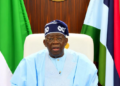
In a dramatic escalation of Nigeria’s battle against spiraling insecurity, President Bola Ahmed Tinubu has unleashed a sweeping nationwide security emergency, igniting fierce debates over arming civilians, decentralizing policing, and forging uneasy alliances with the United States. This exclusive report uncovers the intricate layers of Tinubu’s November 26 declaration, the National Assembly’s provocative push for citizen gun ownership, the thorny path to state policing, and a high-stakes U.S. partnership aimed at dismantling terrorist networks. As kidnappings surge and banditry engulfs communities, these moves signal a nation at a crossroads – desperate for security, yet haunted by the risks of overreach.
The Declaration: A War Footing Against “Foreign Invaders”
President Tinubu’s address to the nation on November 26, 2025, was nothing short of a clarion call to arms – metaphorically, at least for now. Citing a “wave of mass kidnappings and brazen attacks” that have left hundreds dead and thousands displaced in recent weeks, Tinubu proclaimed a “nationwide security emergency.”
This unprecedented step, invoked under constitutional powers, empowers the military, police, and intelligence agencies to launch aggressive operations without the usual bureaucratic shackles. Key pillars of the declaration include:
Mass Recruitment Drive: The Nigerian Police Force, long criticized for understaffing, has been ordered to onboard 20,000 additional officers, swelling its ranks toward a target of 50,000 specialized personnel focused on counter-terrorism and rapid response.
The Army and other services will follow suit with 30,000 new enlistees, prioritizing youth from the National Youth Service Corps (NYSC) for swift integration.
“We cannot fight shadows with skeletons,” Tinubu declared, alluding to the force’s chronic manpower shortages.
Intelligence Overhaul: A centralized command hub will fuse data from the Department of State Services (DSS), National Intelligence Agency (NIA), and military intel, aiming to preempt attacks rather than react to them. Tinubu explicitly labeled some perpetrators as “foreign invaders,” pointing fingers at cross-border syndicates from the Sahel region fueling banditry and insurgency.
Resource Mobilization: Emergency funding – drawn from the national budget and international donors – will equip forces with drones, armored vehicles, and surveillance tech. Curfews in hotspots like Zamfara and Kaduna are now enforceable, with violators facing swift detention.
Supporters, including civil society groups, have hailed the move as “long overdue,” arguing it restores urgency to a complacent system.
Yet critics, like Owei Lakemfa, decry it as a “half-measure” lacking structural reforms, warning that without addressing root causes like poverty and corruption, it risks becoming “another photo-op war.”
Early signs are mixed: A spate of arrests in Borno followed, but a fresh kidnapping in Katsina on November 28 tested the resolve.
Arming the Populace: National Assembly’s Radical Proposal
In a parallel front, the National Assembly has thrust itself into the fray with a contentious proposal to arm “responsible adults,” transforming ordinary Nigerians from victims to vigilantes. Led by Senator Francis Fadahunsi (PDP, Osun East), the Senate passed a resolution on November 27 urging the Federal Government to amend the Firearms Act of 2021, which currently restricts ownership to elites with arduous licensing.
The blueprint:
Eligibility Criteria: Only “responsible citizens” – vetted via background checks, psychological evaluations, and mandatory training – could apply for permits. Firearms would be limited to handguns and shotguns for self-defense, with strict storage rules to prevent misuse.
Rationale: Amid daily headlines of school abductions and farmer-herder clashes, proponents argue that a disarmed populace is a sitting duck. “The state has failed us; let the people defend their homes,” Fadahunsi thundered during debates, echoing sentiments from bishops and community leaders.
Read also:
- Insecurity: Legalize light arms bearing for adult Nigerians- Ohanaeze urges FG, National Assembly
- Reps set to probe $460m CCTV project, amid rising insecurity
- Akpabio unveils Nigeria’s 2025–2030 counter-terrorism plan, sets ambitious blueprint for national security overhaul
The proposal gained bipartisan traction, with northern senators citing Boko Haram’s rural rampages and southern voices invoking secessionist threats.
Safeguards and Skepticism: To mitigate risks, the bill mandates annual renewals and a national registry linked to the Nigeria Police. Yet opponents fear a “Wild West” scenario: ethnic militias could exploit lax enforcement, exacerbating vigilante violence seen in states like Benue. “Arming the untrained is a recipe for anarchy,” warns the Nigeria Bar Association.
The resolution now awaits House of Representatives concurrence and presidential assent, but its timing – hot on Tinubu’s heels – underscores a legislative push for self-reliance in an era of state incapacity.
State Policing: Promise and Peril in Decentralization
At the heart of Tinubu’s emergency lies the long-simmering debate over state policing – a devolution of power from Abuja’s monolithic force to 36 state commands. Tinubu, a former Lagos governor who once as the chief security security officer of his state, has vowed to “champion” this reform, framing it as essential for tackling localized threats like communal violence and cybercrime.
Core Issues and Proposals:
The Case for It: Nigeria’s unitary policing model, inherited from colonial Britain, is ill-suited to a federal giant of 200 million. States like Lagos and Rivers have piloted community guards, but without legal teeth, they’ve clashed with federal officers. Advocates, including the Arewa Consultative Forum, argue state police could deploy 10,000 officers per state, trained in local dialects and terrains, slashing response times from hours to minutes.
Recent academic papers highlight prospects: reduced terrorism through border patrols and community intel.
researchgate.net
Lingering Hurdles: Fears of abuse loom large. Governors, often accused of weaponizing security for political gain, could turn state forces into “private armies,” as seen in past election violence. Funding disparities – oil-rich south vs. agrarian north – risk uneven capabilities. Moreover, integration with federal forces remains fuzzy: Who commands joint ops? A proposed constitutional amendment, tabled in the Senate, seeks to clarify oversight via a National Police Council.
Tinubu’s Pivot: In a November 29 address, the president directed the withdrawal of federal police from VIP details to frontline duties, a move hailed as redistributing scarce resources.
Pilot programs in five high-risk states (Kaduna, Plateau, etc.) are slated for Q1 2026, with NYSC recruits forming the nucleus.
Experts like JJ Omojuwa call it a “paradigm shift,” but caution: “Consensus is easy; implementation is the beast.”
If botched, it could fracture national unity; if successful, redefine federalism.
U.S. Alliance: From Threats to Tentative Teamwork
No element of Tinubu’s strategy is more geopolitically charged than the nascent U.S. collaboration, born from controversy and calibrated diplomacy. In early November 2025, President Donald Trump’s rekindled administration issued stark warnings: U.S. military intervention loomed if Nigeria failed to curb “targeted Christian persecution” and terrorism, framing Boko Haram’s resurgence as a faith-based genocide.
Abuja bristled, with Tinubu retorting that “insecurity, not persecution, is the foe,” and vowing diplomatic defeat of terror.
The pivot came swiftly:
Joint Resolve: A November 2 statement welcomed U.S. aid – intelligence sharing, drone strikes, and training – but insisted on “respect for sovereignty.”
An upcoming Tinubu-Trump summit, teased by aides, promises a counter-terrorism pact under the Trans-Sahara framework, targeting financial networks via Executive Order 13224 sanctions.
Tactical Gains: U.S. tech could bolster Nigeria’s faltering air surveillance, while joint ops in the Lake Chad Basin aim to “crush” Islamist cells. ECOWAS, echoing U.S. concerns, warned of terrorism’s West African spillover.
Nigeria touts progress: a 15% drop in Boko Haram attacks since 2024, per official stats.
Shadow of Suspicion: Skeptics see Trump’s rhetoric as electioneering, leveraging evangelical lobbies. Human rights groups fret over U.S.-backed ops risking civilian casualties, as in past Sahel misfires. Tinubu’s team counters: “Better an ally’s helping hand than a neighbor’s invasion.”
A Nation on the Brink: Whither Nigeria’s Security Renaissance?
Tinubu’s emergency declaration is a high-wire act – bold strokes to staunch bleeding wounds, yet teetering on uncharted edges. Arming citizens could empower or enflame; state policing decentralize or divide; U.S. ties fortify or fetter. As December dawns, with Christmas markets under threat and elections looming in 2027, the stakes couldn’t be higher. Sources close to Aso Rock whisper of a “six-month litmus test”: tangible wins, or the emergency dissolves into recriminations.For now, Nigerians – from Abuja’s corridors to Maiduguri’s markets – watch with bated breath. In Tinubu’s words, echoed in his X post: “This is war. And we shall prevail.”