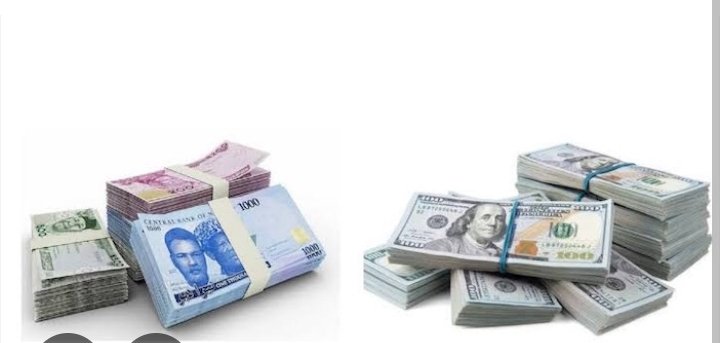
In a striking twist amid global financial uncertainty, the Nigerian Naira has continued its upward climb against the US Dollar, defying fears of trade fallout from US President Donald Trump’s escalating tariff threats against nations linked with the BRICS bloc.
Key Highlights:
- Naira appreciates to ₦1,437 per Dollar, its strongest point in months
- Nigeria’s removal from FATF grey list boosts foreign investor confidence
- Global oil stability and weaker US Dollar drive appreciation
- Trump’s tariff policies backfire as emerging currencies gain ground
As of November 2, 2025, the Naira traded at approximately ₦1,437 per Dollar; its best level since mid-year, up from about ₦1,630 recorded in July. The steady rebound underscores a renewed investor faith in Nigeria’s economy, despite geopolitical headwinds from Washington.
The local currency has maintained consistent gains through 2025. By late October, the official rate improved to ₦1,455.50 per Dollar, while the parallel market held between ₦1,482 and ₦1,492. This mirrors earlier progress such as May’s 1.28% appreciation, when the Naira closed at ₦1,585.50. On October 31, it peaked at roughly 0.00069065 USD per Naira, according to data from Wise.
Several factors underpin the Naira’s strength. Chief among them is Nigeria’s removal from the Financial Action Task Force (FATF) grey list in October 2025. The decision followed a series of successful financial reforms that strengthened regulatory transparency and attracted fresh foreign direct investment.
Oil market stability has also boosted Nigeria’s foreign reserves, as crude exports remain a vital revenue source. Meanwhile, the US Dollar’s weakening, its worst half-year performance since 1973, has given emerging currencies like the Naira a rare lift.
Also the Dangote Refinery has tremendously improved Nigeria earnings, while meeting substantial energy needs of Nigerian, thereby improving balance of trade and shooting up foreign reserves.
Analysts attribute the Dollar’s fall to Trump’s unpredictable policies: aggressive tariffs, clashes with the Federal Reserve, unfunded tax cuts, and a credit downgrade by Moody’s. The resulting uncertainty has eroded the Dollar’s traditional safe-haven appeal.
Read also: - Naira ranked 9th weakest currency in Africa despite economic growth
- Naira plummets to N1,635.15 per Dollar in Exchange Market amidst economic concerns
- Naira crashes to N698 per $1 at parallel market
President Trump’s second term has reignited his combative trade stance, with threats of new tariffs targeting BRICS-affiliated countries. Since Nigeria joined BRICS as a partner nation in January 2025, it has faced mounting pressure from Washington.
By July, reports confirmed additional US tariffs on Nigerian goods, with Trump warning of potential 100% levies if Nigeria deepens its BRICS ties. Despite this, President Bola Tinubu maintains that the country’s economic fundamentals remain “too strong to fear US tariffs.”
Trump’s remarks in mid-October that his trade measures had “crushed BRICS ambitions” have proven inaccurate, as the alliance continues to expand its influence across developing economies.
Ironically, the very policies designed to strengthen the US economy are fueling the Naira’s recovery. The weakened Dollar has offset the potential shock of tariffs, while Nigeria’s domestic reforms and stable oil exports have provided additional cushion.
Still, economists warn that prolonged trade wars could trigger fresh volatility. For now, however, the Naira’s rise stands as a symbol of resilience in a turbulent global market.
As global trade tensions deepen and BRICS expands its reach, Nigeria’s currency story offers a clear lesson: sound domestic policies and global diversification remain the strongest shields against economic coercion.