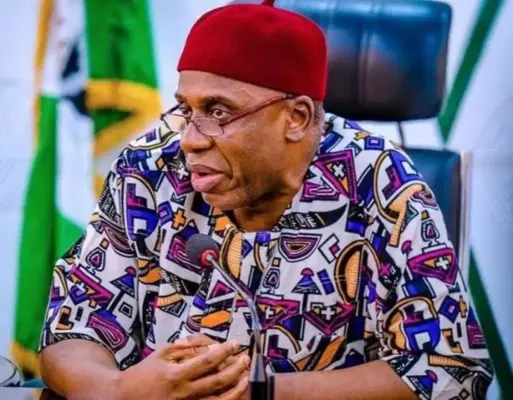
The race for Nigeria’s 2027 presidential election is gathering momentum within the African Democratic Congress, the opposition platform increasingly seen as the rallying point for forces seeking to unseat President Bola Tinubu and the ruling All Progressives Congress. At the centre of this unfolding drama is former Rivers State governor and ex-Minister of Transportation, Rotimi Amaechi, whose ambition and political weight continue to stir debate within the party.
Amaechi formally joined the ADC in July 2025 after exiting the APC, where he contested and lost the 2023 presidential primary to Tinubu. Since then, he has left little room for doubt about his intentions. He has openly declared his interest in the presidency, insisting on a transparent and competitive primary while firmly rejecting any proposal that would relegate him to a vice-presidential role. For Amaechi, the argument is both political and moral. He maintains that the South should retain the presidency in 2027, warning that a return of power to the North so soon after President Muhammadu Buhari’s tenure would undermine the logic of the 2015 power shift.
Despite his confidence, the question persists within political circles and among ADC stakeholders: will the party eventually settle for Amaechi as its presidential flagbearer, or will other powerful interests prevail?

The ADC’s internal dynamics are shaped by the presence of other political heavyweights who have either defected to or aligned with the party. Former Labour Party presidential candidate Peter Obi, who officially joined the ADC in December 2025, commands a vast and energetic support base, particularly among young voters and urban constituencies. His “Obidient” movement has remained vocal in its demand that the party zones its ticket to the South, with many supporters viewing Obi as the most viable challenger to Tinubu.
Former Vice President Atiku Abubakar, who joined the ADC in November 2025, adds another layer of complexity. With deep roots in the North and decades of political experience, Atiku has been central to coalition talks and bridge-building efforts within the opposition. His entry has reinforced the ADC’s national outlook but has also intensified the zoning debate.
Amaechi, for his part, has projected himself as a battle-tested administrator with national reach, drawing on his two terms as governor and his years in the federal cabinet. He has reportedly held extensive consultations with party leaders across regions, including marathon meetings with northern stakeholders, in a bid to consolidate support ahead of the primaries.
ADC leaders, including National Publicity Secretary Bolaji Abdullahi and party chairman David Mark, have consistently preached unity, hinting at the possibility of a consensus candidate to avoid a divisive primary. While none of the leading aspirants has publicly rejected the idea of consensus, party elders have cautioned against a winner-takes-all mentality that could fracture the coalition before it faces the APC machine.
Read also:
- Oshiomole Mulls Plan To Contest Edo North Senatorial Seat in 2023.
- Group canvases for Emefiele’s Presidency
- Obaseki assures more support for MSMEs
For now, no final decision has been taken. The party continues to focus on consultations, membership mobilisation and manifesto development through a high-powered committee that includes respected figures such as John Oyegun and Pat Utomi. The presidential primaries, expected later in 2026, remain the ultimate battleground.
Amaechi’s prospects present a mix of strengths and challenges. His outspoken criticism of the Tinubu administration and his appeal as a southern alternative resonate with some power brokers. There is also speculation, though unconfirmed, that strategic alliances could tilt in his favour. However, critics argue that he lacks the grassroots momentum enjoyed by Obi or the entrenched northern networks associated with Atiku. Others point to Rivers State politics, suggesting that Amaechi may struggle to deliver his home base amid strong local opposition.
Beyond individual ambitions, the ADC faces a broader test of cohesion. Internal disagreements over zoning, fears of disunity and concerns about overcoming the APC’s institutional dominance all loom large. Party insiders warn that failure to manage these tensions could hand Tinubu a strategic advantage in 2027.
For now, the ADC is unlikely to “settle” for Amaechi in the sense of reluctantly anointing him as a compromise candidate. Instead, the party appears headed toward either a fiercely contested primary or a carefully negotiated consensus shaped by electoral calculations rather than sentiment. Whether Amaechi ultimately emerges as the standard-bearer will depend on how the party balances regional interests, voter enthusiasm and the overriding need for unity.
As Nigerians watch the opposition realign ahead of 2027, one thing is clear: the ADC’s decision will not only define its own future but could also reshape the country’s political landscape.