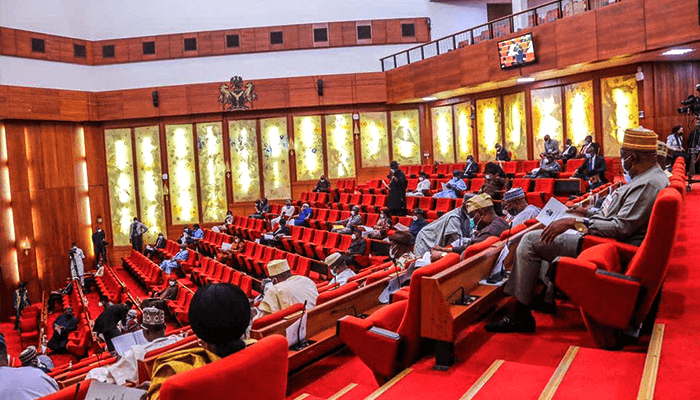
Fifteen senators on Tuesday, voted in favour of a proposal to make the real-time electronic transmission of election results compulsory, highlighting deep divisions in the Senate over amendments to the Electoral Act.
The lawmakers, drawn from different political parties, supported a clause that would require the Independent National Electoral Commission (INEC) to electronically transmit results directly from polling units as voting concludes.

Those who voted in support include Natasha Akpoti-Uduaghan (PDP/Kogi Central); Enyinnaya Abaribe (ADC/Abia South); Abdul Ningi (PDP/Bauchi Central); Aminu Tambuwal (PDP/ Sokoto South), and Ireti Kingibe (ADC/ FCT).
Others backing the provision were Seriake Dickson (PDP/Bayelsa West); Onawo Ogwoshi (ADC/Nasarawa South); Tony Nwoye (ADC/ Anambra North); Victor Umeh (ADC/ Anambra Central), and Ibrahim Dankwambo (PDP/ Gombe Central).
The remaining supporters were Austin Akobundu (PDP/Abia Central); Khalid Mustapha (PDP/Kaduna North); Sikayo Yaro (PDP/Gombe South); Emmanuel Nwachukwu (APGA/Anambra South); and Peter Jiya (PDP/Niger South).
The proposed amendment, one of the most debated elements of the ongoing review process, seeks to legally mandate INEC to transmit election results electronically and in real time from polling units.
Read Also:
- Tinubu seeks Senate approval to confirm Jamila as INEC national commissioner
- Atiku reacts as INEC announces 2027 election timetable amid Ramadan concerns
- INEC requests N873.78bn for 2027 elections, N171bn for 2026 operations
Supporters argue that enshrining the requirement in law would improve transparency, curb electoral malpractice, and reduce post-election litigation.
They maintain that compulsory electronic transmission would bolster public trust in the electoral system.
However, critics have expressed reservations, citing concerns about technological readiness, network coverage in rural communities, and the possibility of technical failures on election day.
Tuesday’s vote reflects widening political differences within the Senate over the extent of INEC’s authority and the mechanisms needed to safeguard electoral credibility.
The final outcome of the amendment process is expected to significantly influence preparations for the next general elections, with civil society organisations and political observers closely following developments in the National Assembly.